Curriculum Integration Guide
Curriculum Integration Guide
Contur secțiune
-
Curriculum Integration Guide
Implementing AAC in Inclusive Schools
Recommendations for adapting and implementing Augmentative and Alternative Communication in daily school practice
Project
EduZone. Inclusive communication for all
Project Nr.
2025-1-RO01-KA220-SCH-00055640
Deliverable code
Implementation guide for other schools
Work package (WP)
WP5 Dissemination and Sustainability
Lead organisation
Phoenix Knowledge Wings gGmbH
Version history
Version 1.0 | English language working edition | May 2026
This guide is prepared as a visually engaging, teacher-friendly and school-facing resource for teachers, therapists, parents, school leaders, NGOs and partner institutions that want to move AAC from a specialised support tool into everyday classroom participation.
Funded by the European Union. Views and opinions expressed are however those of the author(s) only and do not necessarily reflect those of the European Union or the granting authority. Neither the European Union nor the granting authority can be held responsible for them.
Disclaimer and educational use note
European Union disclaimer
Co-funded by the European Union. Views and opinions expressed in this guide are however those of the author or authors only and do not necessarily reflect those of the European Union or the National Agency. Neither the European Union nor the granting authority can be held responsible for them.
Educational and methodological disclaimer
This guide is an educational and methodological resource for schools and partner organisations. It is not a diagnostic tool, it does not replace individual assessment by qualified specialists, and it must not be used as a substitute for speech and language therapy, medical advice or the official support procedures required in each country. Decisions concerning AAC tools, communication goals and individual support plans can be made through collaboration between the learner, teachers, therapists, parents and other relevant professionals.
Language and dignity note
Throughout this guide, the preferred principle is to speak about learners in ways that preserve dignity, agency and choice. When a learner or family has a clear language preference, that preference is respected, because communication rights begin with the right to name oneself and to be recognised as a person with preferences, relationships and future possibilities.
Contents at a glance
Guide area
What the reader will find
Start here
Disclaimer and educational use note; how this guide was developed; glossary and acronyms; how to use this guide.
European and national orientation
Partner-country adaptation pages, including the Basque Country regional orientation for the Spanish partner.
Methodological core
AAC principles, opportunity barriers, professional learning roles, EduZone six-step model and 30-60-90 day pathway.
Classroom practice
Typical situations, scenario narratives, micro-training pages, curriculum integration and cultural-linguistic adaptation.
Implementation support
Monitoring learner agency, case study framework, digital platform connection, dissemination toolkit, AAC-informed classroom management and low-resource strategies.
Tools and templates
Readiness checklist, learner profile, lesson adaptation template, parent bridge sheet, observation sheet, case-study template and classroom-management action sheets.
This contents page deliberately avoids page numbers so that partner schools can add, remove or translate sections without breaking navigation. A numbered table of contents can still be generated in Microsoft Word if the guide is later converted into a final publication layout.
Glossary and acronyms
Term
Working meaning in this guide
AAC
Augmentative and Alternative Communication; tools, strategies and supports that supplement or replace speech when speech alone is not sufficient for participation.
AAC user
A learner or adult who uses signs, symbols, communication boards, speech-generating devices, gestures, writing or other supports to communicate.
Agency
The learner’s practical ability to make choices, ask questions, refuse, request support, influence activities and participate in decisions that affect them.
Communication partner
Any adult or peer who interacts with the AAC user and therefore needs to wait, model, confirm, expand and respect AAC communication.
Core board
A reusable set of high-frequency words, symbols or phrases that can support communication across many classroom situations.
LTT
Learning, Teaching and Training activity; a transnational Erasmus+ learning exchange used in EduZone to test ideas, compare national situations and strengthen implementation practice.
OER
Open Educational Resource; a learning or teaching resource that can be accessed and reused under the licence conditions selected by the project.
PECS
Picture Exchange Communication System; one structured approach within the wider AAC field, not a synonym for AAC as a whole.
SEN
Special educational needs; the term is used here only where it reflects national or project terminology.
UDL
Universal Design for Learning; a design approach that offers multiple ways to engage, understand information and express learning.
How this guide was developed through EduZone learning exchanges
This guide was developed as a practical synthesis of the EduZone partnership’s work on AAC, inclusive education and curriculum integration. It draws on partner expertise, classroom realities, case discussions and the transnational learning, teaching and training activities organised within the project, including the intensive exchanges in Italy and Germany.
During these exchanges, partners compared national approaches to inclusive education, reviewed classroom and family-based AAC situations, discussed barriers faced by teachers and learners, and tested how the proposed methodological model could be adapted to different school systems. For this reason, the guide is presented as a shared European working model that schools can adapt to their own legislation, language, curriculum, resources and learner profiles.
What the LTT activities contributed to this guide
Practical classroom cases
Partner discussions helped translate AAC principles into ordinary school situations, including transitions, group work, breaks and home-school communication.National comparison
The Italian and German exchanges supported a careful comparison of school systems, regional responsibilities and realistic implementation routes.Critical review
Partners tested whether the model was too theoretical, too resource-heavy or too narrow for different classroom and family realities.Shared language
The guide uses common terms that can travel across countries while leaving room for national terminology and local professional vocabulary.Transferability
The guide was shaped as a practical package that can be used in teacher meetings, parent sessions, digital platform materials and dissemination workshops.Evidence mindset
The partnership focus moved from “materials produced” to visible learner agency, adult practice change and school routines that make communication possible.How to use this guide
This guide is designed as a practical bridge between the EduZone project results and the everyday reality of schools that want to introduce AAC in a credible, sustainable and learner-centred way. It can be used as a shared implementation model rather than as a theoretical manual, because its main function is to help a school understand what can change in the classroom, who can be involved, what can be documented, how the learner voice can become more visible, and how local teams can adapt the model without losing its core educational purpose.
Fast route for busy schools
A school that has limited time can start with the 30-60-90 day pathway, the typical situations section, the teacher-parent-therapist cooperation protocol and the annex templates, then return later to the fuller methodological explanation when the first pilot classroom has produced evidence and questions.
Full route for project partners
A project partner preparing dissemination, training or national adaptation can read the whole guide, use the methodological model as the common framework, select locally relevant examples, adapt the templates, and collect at least one short case study showing how AAC increased learner participation, choice, self-expression or cooperation with peers.
Figure 1. EduZone AAC implementation model prepared for this guide.
How this guide empowers the project target group
The central purpose of AAC in inclusive schools is not simply to give a learner a board, a device or a set of pictograms, but to increase the learner’s power to participate in real situations where communication changes what happens next. A learner who can choose, refuse, ask, explain, repair a misunderstanding, join a game, contribute to group work, comment on a lesson or share a need with an adult is not only receiving support, but is also exercising agency in the social and academic life of the school.
For teachers, therapists and parents, empowerment means moving from occasional support to planned communication opportunities across the whole day. This includes the ordinary moments that are often missed, such as arrival, transition between lessons, choosing materials, asking for help, lunch, break time, group work, conflict, fatigue, success and going home.
Agency moment
When a learner uses AAC to say “stop”, “I need more time”, “I want to work with her”, “I do not understand” or “I choose this”, the school is not only observing communication progress, but is also creating a small democratic moment in which the learner has influence over learning, relationships and personal boundaries.
Figure 2. Learner agency ladder through AAC.
How target groups can tailor and disseminate the guide in their countries
The EduZone target groups can disseminate this guide most effectively when they treat it as a living implementation package rather than a fixed brochure. Each country team can retain the same core logic while changing examples, languages, symbols, home routines, national school procedures, parent communication channels and teacher-training formats, because AAC succeeds only when it fits the cultural, linguistic and institutional reality of the learner.
Teachers can share the guide through peer-learning meetings, short classroom demonstrations and practical teacher training sessions. Therapists can use it to align clinical goals with school routines. Parents can use the home-school templates to request continuity between classroom communication and family life. NGOs and project partners can use the guide for workshops, local advocacy, policy dialogue, project dissemination events and follow-up pilots in new schools.
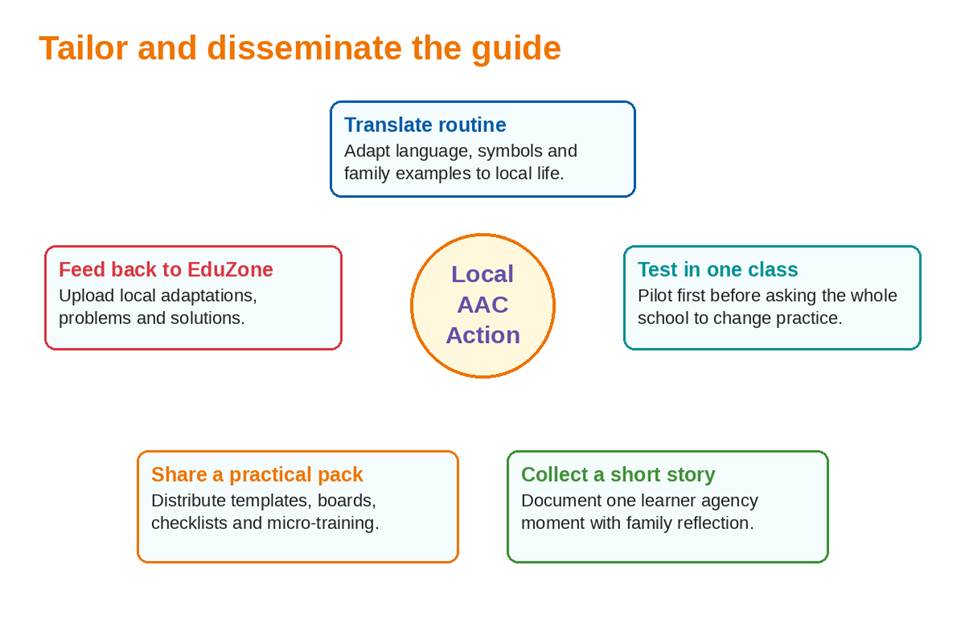
Figure 3. Local tailoring and dissemination loop.
Local adaptation rule
A strong national adaptation does not translate the guide word for word and stop there. It tests whether the vocabulary, symbols, routines, examples, family roles, school staff roles and legal references make sense in that country, and it adds local case studies that show what changed for learners, teachers and parents.
National orientation: linking the guide with partner-country systems
This section is not legal advice and must not replace consultation of national legislation, ministry guidance or school inspectorate procedures. Its function is to help all EduZone partner organisations position the guide as a practical bridge between AAC implementation and the policy reality of each partner country. A national orientation section is useful because the project application expects the guide to support transferability and sustainability, while a separate WP5 activity addresses integration into national curricula and policy frameworks.
Why this matters for dissemination
A school is more likely to adopt AAC when the guide shows how the method supports existing obligations on inclusive education, individual support planning, accessibility, participation, reasonable accommodation, teacher professional learning and family cooperation, instead of presenting AAC as an additional project activity disconnected from national systems.
How to use national orientation safely
Each country page is designed as a concise localisation note that the relevant partner can finalise before publication, because laws, ministry orders, regional rules and terminology may change during the project period. The safest approach is to describe the national direction in broad educational terms, name the core legal or policy anchors, and then explain how the EduZone AAC model can complement existing procedures through classroom routines, teacher training, parent cooperation and evidence collection.
Romania national adaptation page
National application note
Use the guide as a practical bridge between special education expertise, mainstream-school support, adapted curriculum work and family cooperation, with attention to students who receive support through school orientation procedures and special educational support services.
Legal and policy anchors
The Romanian local team can verify the current Education Law, ministry orders on special educational needs, school orientation and support teacher arrangements, and any county-level procedures that affect how AAC can be written into individual plans or classroom adaptations.
Suggested local adaptation
Add a Romanian annex showing how a teacher, therapist and parent can use the same AAC routine in a mainstream class, a special education setting and home communication, with Romanian terminology checked by CSEI Buzau.
For final localisation, the national team can add the exact names of applicable laws, ministry orders, regional guidelines, school documentation forms, responsible services and teacher-training channels, where this is useful for schools. The final text is best kept short and practical, because the aim is to help a school position AAC within its existing responsibilities, not to create a separate legal manual.
Spain national adaptation page
National application note
Use the guide to reinforce inclusive support for learners with specific educational support needs, including access to specialists such as special education teachers, speech therapy professionals and guidance services, while respecting the decentralised regional education context.
Legal and policy anchors
The Spanish local team can verify national education law, regional Basque Country procedures, NEAE terminology, accessibility rules, and school-level support planning expectations before translating or disseminating the guide.
Suggested local adaptation
Add a Spanish or Basque-context example in which AAC is used in primary education to support group work, peer participation and family-school continuity, rather than only specialised intervention.
For final localisation, the national team can add the exact names of applicable laws, ministry orders, regional guidelines, school documentation forms, responsible services and teacher-training channels, where this is useful for schools. The final text is best kept short and practical, because the aim is to help a school position AAC within its existing responsibilities, not to create a separate legal manual.
Basque Country regional orientation
Because the Spanish partner is located in the Basque Country, this regional note recognises the specific education context of the Basque autonomous community rather than treating Spain as a single uniform implementation environment. It is not intended to become a legal chapter; it offers a respectful bridge between AAC implementation, the Basque inclusive-school framework, regional support services, multilingual realities and local professional-learning channels.
Regional respect without legal overload
The Basque Country note can be written as a validation prompt for the partner school: which regional rules, services, training routes and school documents can be checked before adapting AAC routines, communication boards and family guidance for local use.
Regional localisation point
Why it matters for AAC implementation
Inclusive-school and diversity-response framework
AAC is presented as a practical access and participation support within the Basque inclusive education approach, not as a separate external method.
Multilingual school reality
Communication boards, home-school sheets and examples may need Spanish, Basque and family-language adaptation, especially where identity, home vocabulary and cultural routines matter.
Regional and local support structures
The partner school can identify the exact advisory services, specialist teams, teacher-training routes and school documentation procedures that can support AAC implementation.
Respect for autonomy and cultural diversity
Recognising the Basque context signals that European transfer does not mean copying one model, but adapting a common AAC framework to regional education cultures.
Italy national adaptation page
National application note
Use the guide to complement Italy’s long tradition of school inclusion, support teachers and individualised planning, while making communication access more visible inside ordinary lessons and peer interaction.
Legal and policy anchors
The Italian local team can verify the current application of Law 104/1992, individualised education plan requirements, support-teacher responsibilities and any regional or school-level procedures relevant to communication assistance and assistive technologies.
Suggested local adaptation
Add an Italian case page that connects AAC with the PEI process, classroom co-teaching and peer participation, showing how communication goals appear in daily subject learning.
For final localisation, the national team can add the exact names of applicable laws, ministry orders, regional guidelines, school documentation forms, responsible services and teacher-training channels, where this is useful for schools. The final text is best kept short and practical, because the aim is to help a school position AAC within its existing responsibilities, not to create a separate legal manual.
Portugal national adaptation page
National application note
Use the guide to support the inclusive education framework created by Decree-Law No. 54/2018, especially the logic of universal, selective and additional measures, resource centres and multidisciplinary approaches.
Legal and policy anchors
The Portuguese local team can verify Decree-Law No. 54/2018, any updates or regional Azores procedures, assistive technology arrangements, and school documentation expectations for inclusive measures.
Suggested local adaptation
Add a Portugal/Azores page showing how one AAC routine can be treated as a support measure for access, participation and curriculum engagement across the school day.
For final localisation, the national team can add the exact names of applicable laws, ministry orders, regional guidelines, school documentation forms, responsible services and teacher-training channels, where this is useful for schools. The final text is best kept short and practical, because the aim is to help a school position AAC within its existing responsibilities, not to create a separate legal manual.
Germany national adaptation page
National application note
Use the guide as a practical adaptation layer for the federal-state context, where special educational support aims to enable participation, individual development and the highest possible level of inclusion in school and society.
Legal and policy anchors
For the German context, the local partner team can verify the relevant Land-level school law and inclusion guidance, not only federal or European summaries, because school support, assistive technology routes and responsibilities differ between Länder.
Suggested local adaptation
Add a Germany/Bavaria-oriented page explaining how the 30-60-90 pathway can be used in school cooperation, teacher training and local dissemination without claiming one uniform national procedure.
For final localisation, the national team can add the exact names of applicable laws, ministry orders, regional guidelines, school documentation forms, responsible services and teacher-training channels, where this is useful for schools. The final text is best kept short and practical, because the aim is to help a school position AAC within its existing responsibilities, not to create a separate legal manual.
Project logic and target users
This output answers the EduZone requirement to create an implementation guide for other schools, containing theoretical principles, case studies and practical examples, with concrete tools and teaching strategies for teachers, therapists and parents. The guide is therefore written for multiple readers, but it keeps one shared question at the centre: how can a school make AAC visible, usable and meaningful in ordinary learning rather than keeping it as an occasional specialist intervention?
Main user groups
Target group
What this guide helps them do
Teachers
Teachers need classroom routines, lesson adaptations, peer participation ideas and realistic ways to model communication without becoming AAC specialists overnight.
Therapists and support professionals
Therapists need a shared school language, observation tools, communication partner strategies and evidence that AAC goals are being practised beyond therapy sessions.
Parents and families
Parents need practical, culturally responsive and low-pressure ways to connect school vocabulary with home life, family choices, routines and relationships.
School leaders
School leaders need an implementation pathway, staff roles, training logic, evidence tools and sustainability arguments that make AAC part of inclusive school development.
NGOs and project partners
NGOs and partners need a transferable package that can be disseminated, adapted, translated and used in workshops, policy dialogue and local pilots.
AAC principles in one school-friendly frame
AAC is best understood as a broad set of communication tools, techniques and strategies that supplement or compensate for speech and language difficulties. It includes unaided communication such as gesture, facial expression, eye gaze and body movement, as well as aided systems such as objects, photographs, pictograms, communication boards, books, tablets and speech-generating devices. The practical question for schools is not whether a tool looks impressive, but whether it helps the learner communicate more often, more clearly and with more influence in real contexts.
Interesting fact
A low-tech communication board can be as important as a high-tech device when it is available at the right moment, understood by communication partners and connected to meaningful choices, while an expensive device can fail when no one knows how to model it, personalise it or keep it available across the school day.
Wikimedia Commons image: “The main page of an AAC device layout for English speakers”, CommuniKate page set, CC BY-SA 4.0.
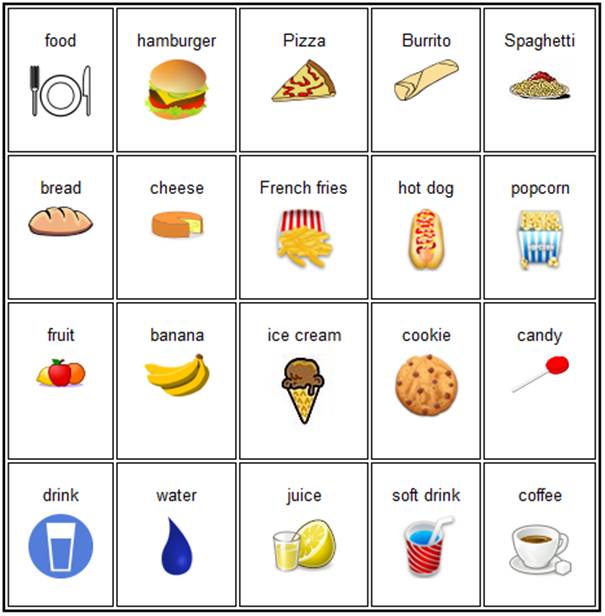
Wikimedia Commons image: “Sample page from AAC communication book”, Quadell, CC0 with source notes on original file page.
What counts as successful AAC in school
Successful school implementation is best measured through participation rather than through ownership of materials. The most useful evidence is visible when a learner initiates communication, responds to a peer, asks for help, makes a choice, repairs a misunderstanding, participates in literacy, contributes in group work, uses communication during breaks, and carries communication across settings with support from adults who know how to wait, model and respond.
Opportunity barriers: what schools must remove
The uploaded AAC literature is especially useful because it reframes implementation around opportunity barriers, meaning the barriers that come from school policy, staff practice, knowledge, skills, assumptions and organisational routines rather than from the learner alone. This is a strong frame for EduZone because it prevents the guide from becoming a list of learner deficits and instead asks what the school must change so that communication becomes possible.
Barrier
How it appears in school
Implementation response
Knowledge and skill barrier
Adults do not know how AAC works, how to model language, how to interpret attempts, or how to personalise systems.
Use the EduZone model to assign responsibility, create routines, coach adults, involve families and review evidence of participation.
Practice barrier
AAC is available only in therapy, kept in a bag, used only for requesting, or ignored during lessons, breaks and transitions.
Use the EduZone model to assign responsibility, create routines, coach adults, involve families and review evidence of participation.
Attitude barrier
Adults or peers assume that the learner has little to say, that AAC is too slow, or that communication must look like speech to be valued.
Use the EduZone model to assign responsibility, create routines, coach adults, involve families and review evidence of participation.
Policy barrier
School procedures do not define who is responsible for AAC access, training, vocabulary updates, family communication or review meetings.
Use the EduZone model to assign responsibility, create routines, coach adults, involve families and review evidence of participation.
Cultural and linguistic barrier
The system does not include the home language, culturally meaningful vocabulary, relevant voices, symbols, family routines or accessible programming support.
Use the EduZone model to assign responsibility, create routines, coach adults, involve families and review evidence of participation.
Common mistake
Do not treat AAC as the learner’s private equipment only. It is also a classroom ecology, because communication partners, routines, access points, adult expectations and school rules determine whether the learner can actually use the system.
Whole-school professional learning and team roles
AAC implementation is strongest when it is embedded in a whole-school professional learning community. Teachers, therapists, assistants, school leaders, parents and peers do not need to have identical expertise, but they do need shared language, shared expectations and a shared habit of reflective problem-solving. Inclusive education depends on collaboration, because no single professional sees all the communication opportunities that happen across the learner’s day.
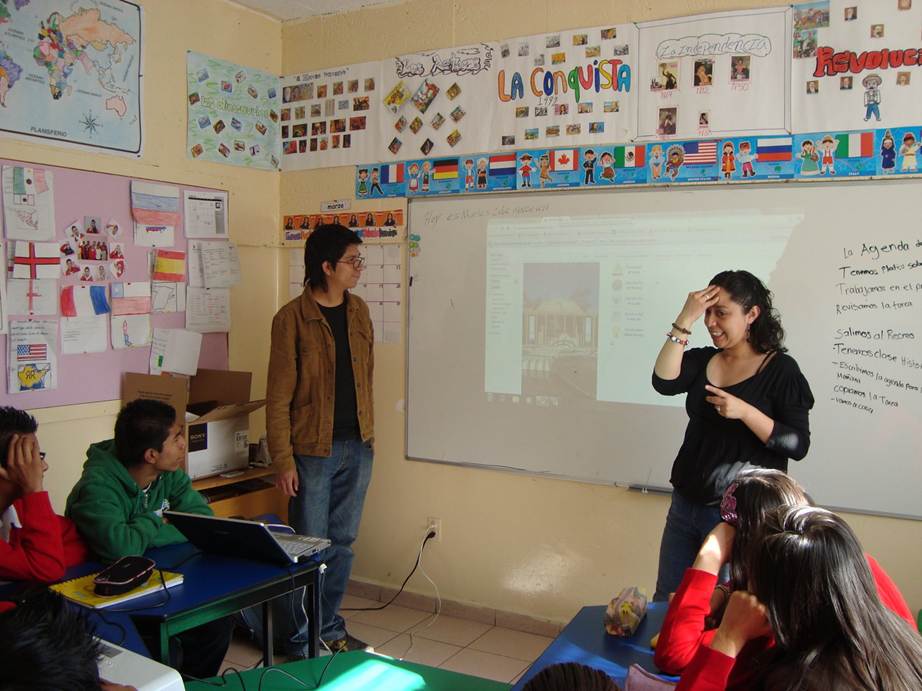
Wikimedia Commons image: “Wikimedia Mexico - Outreach class for deaf children”, ProtoplasmaKid, CC BY-SA 3.0.
Team agency tip
At the first school meeting, ask each adult to name one situation where the learner currently has little voice and one small change that could create a communication opportunity within a week, because the fastest way to make AAC real is to start from moments that already happen every day.
Role
Core contribution
First practical action
Class teacher
Integrates AAC into lesson routines, classroom language, group work, feedback and transitions.
Select one daily routine and agree what the learner can express in that routine.
Therapist or AAC specialist
Guides assessment, modelling, access methods, vocabulary selection and communication partner training.
Select one daily routine and agree what the learner can express in that routine.
Parent or caregiver
Connects school communication with home routines, personal interests, culture, language and family priorities.
Select one daily routine and agree what the learner can express in that routine.
Teaching assistant or support staff
Keeps AAC available, notices attempts, supports peer interaction and documents small participation changes.
Select one daily routine and agree what the learner can express in that routine.
School leader
Protects time, assigns responsibility, ensures training, removes policy barriers and supports dissemination.
Select one daily routine and agree what the learner can express in that routine.
The EduZone methodological model
Step 1. Identify participation needs
The school team begins by observing the learner in ordinary contexts and asking where communication breaks down. The focus is not only on speech, but also on whether the learner can influence activities, relationships, choices, questions and transitions. Observation can include class, break, lunch, specialist support, digital work and home-school communication.
Try this tomorrow
Choose one learner and one routine, such as entering the classroom or choosing materials, then write down three messages the learner can express in that situation and three partner behaviours adults can use to make those messages possible.
Step 2. Match tools to the learner and the context
AAC selection is best guided by feature matching rather than by trends. A learner may need objects, photographs, pictograms, printed boards, signs, eye gaze, partner-assisted scanning, a tablet, a speech-generating device or a combination of methods. The right choice is the method that the learner can access, that communication partners can support, and that remains useful across school and home situations.
Step 3. Build AAC into ordinary routines
AAC becomes sustainable when it is attached to routines that already exist. A communication board used only in a therapy session will not create the same agency as a board used for arrival, lesson choices, group work, asking for help, transitions, lunch and going home. Every routine can include at least one reason for the learner to communicate, one adult modelling behaviour and one visible response to what the learner expresses.
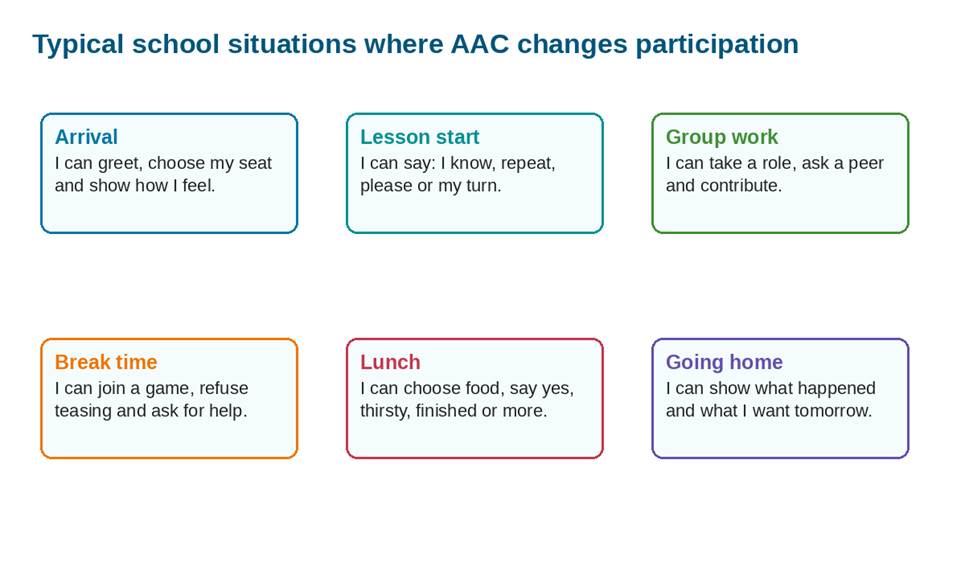
Figure 4. Typical school situations where AAC changes participation.
Step 4. Coach communication partners
Teachers, assistants, therapists, peers and parents need coaching because AAC is relational. A learner cannot carry the whole burden of communication when adults move too fast, ask only test questions, ignore multimodal signals or speak for the learner. Partner coaching can include waiting, modelling, confirming, expanding, offering choices, respecting refusal and responding to every credible communication attempt.
Step 5. Monitor agency and participation
Monitoring is best simple enough to use every week. The team can track how often the learner initiates communication, makes choices, asks for help, refuses, participates with peers, uses AAC in a new setting, or shows reduced frustration because communication opportunities have improved. The aim is not to produce bureaucratic paperwork, but to keep evidence visible and actionable.
Step 6. Adapt, document and disseminate
After the first cycle, the school can adapt materials, add family vocabulary, improve access, coach new partners and document one case example. This case can then be shared in a short teacher meeting, parent workshop, project dissemination event or platform upload, making the school an active multiplier rather than a passive recipient of project materials.
30-60-90 day implementation pathway
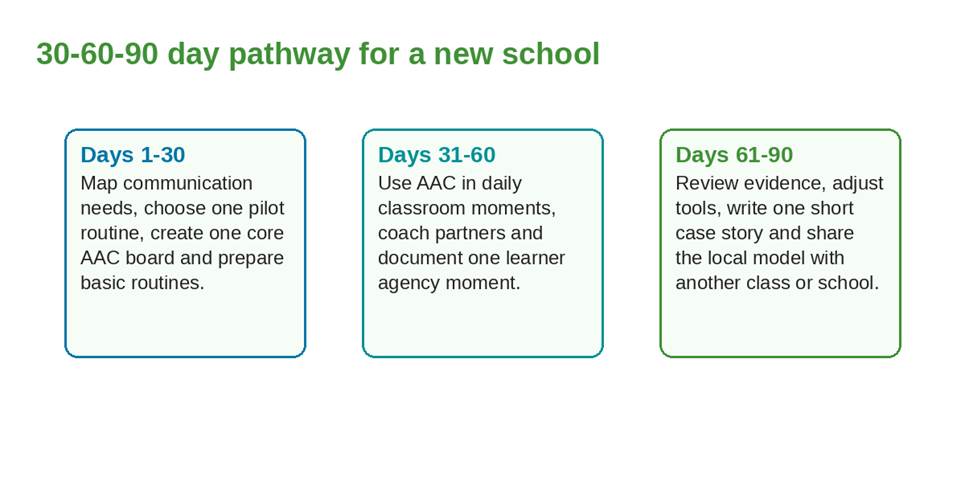
Figure 5. A practical route for schools beginning AAC implementation.
Facilitator note
This roadmap can be used as a workshop handout, because it helps participants move from “AAC is important” to “we know what we will do in the next 30 days”.
Typical school situations and scenario narratives
Morning arrival
A learner enters the classroom and usually waits passively while adults decide where he sits and what he does next. The class teacher places a small arrival board near the door with options for greeting, emotional state, preferred seat, help and break. During the first week the adult models two choices and waits; by the second week the learner begins to choose “quiet”, “with friend” and “help bag”, which changes the morning from management into participation.
Teacher prompt
During this situation, the adult models one message, wait long enough for a response, accept multimodal communication, and show that the learner’s message changes what happens next.
Group work
During group tasks, peers often work around the learner because communication is slow and adults rush to complete the activity. The teacher creates a group role board with “I choose”, “I agree”, “I do not agree”, “my idea”, “ask me”, “wait” and “finished”. The learner is assigned a visible role, peers are coached to wait, and the group records one contribution from each member before moving on.
Teacher prompt
During this situation, the adult models one message, wait long enough for a response, accept multimodal communication, and show that the learner’s message changes what happens next.
Break time conflict
At break time a learner becomes distressed when peers take a ball, but adults interpret the situation only as behaviour. A small playground card with “my turn”, “stop”, “too loud”, “I want to join”, “I need help” and “not funny” gives the learner a way to name the problem. The adult response is then linked to communication, not only to discipline.
Teacher prompt
During this situation, the adult models one message, wait long enough for a response, accept multimodal communication, and show that the learner’s message changes what happens next.
Lunch choice
A learner eats very little at lunch and adults assume refusal is random. The team prepares a food and comfort board with yes, no, more, finished, water, pain, hot, cold, hungry, thirsty and preferred foods. The learner begins to indicate “water”, “finished” and “not this”, which gives the family and school better information about comfort and preference.
Teacher prompt
During this situation, the adult models one message, wait long enough for a response, accept multimodal communication, and show that the learner’s message changes what happens next.
Going home
Parents receive only general comments about behaviour, so home and school remain disconnected. The class uses a simple end-of-day board with “I liked”, “hard”, “friend”, “help”, “tomorrow”, “homework” and “tired”. The learner chooses two messages to send home, which makes communication continuity more personal and less dependent on adult interpretation.
Teacher prompt
During this situation, the adult models one message, wait long enough for a response, accept multimodal communication, and show that the learner’s message changes what happens next.
Expanded school scenario library for training and dissemination
This additional scenario library gives partner organisations and schools a practical bank of short narrative examples that can be used in teacher workshops, parent meetings, dissemination events and local adaptation sessions. Each scenario is written so that it can become a one-page handout or a short classroom demonstration without additional theoretical explanation.
The learner is present but not influencing the lesson
A learner sits in the classroom and receives simplified tasks, but the class rarely knows what the learner thinks. The team introduces a small opinion strip with “I like”, “I do not like”, “easy”, “hard”, “again”, “different” and “my idea”. The teacher uses the same strip with the whole group for two minutes, so the learner’s AAC is not isolated from class communication.
Practical transfer point
When using this scenario in training, ask participants to identify the participation barrier, the AAC support, the adult partner behaviour and the evidence of learner agency, because these four elements keep the discussion focused on implementation rather than on abstract approval of inclusion.
Possible local adaptation
Partners can replace names, subjects, school routines, home examples, language choices and support-team roles so that the same scenario fits the national context without changing the core principle.
The learner waits while adults decide
During transitions, adults move quickly and decide for the learner because the timetable is pressured. The team adds a two-choice transition board with “now”, “two minutes”, “with teacher”, “with friend”, “quiet route” and “help”. The learner begins to influence the timing and support route, which reduces conflict and increases predictability.
Practical transfer point
When using this scenario in training, ask participants to identify the participation barrier, the AAC support, the adult partner behaviour and the evidence of learner agency, because these four elements keep the discussion focused on implementation rather than on abstract approval of inclusion.
Possible local adaptation
Partners can replace names, subjects, school routines, home examples, language choices and support-team roles so that the same scenario fits the national context without changing the core principle.
The learner has behaviour before communication
A learner throws materials when a task is too difficult, and the first adult response is usually correction. The team creates a repair board with “too hard”, “show me”, “break”, “different task”, “not finished” and “help hand”. Adults model the board before the task escalates, so behaviour is treated as a communication opportunity rather than only a discipline issue.
Practical transfer point
When using this scenario in training, ask participants to identify the participation barrier, the AAC support, the adult partner behaviour and the evidence of learner agency, because these four elements keep the discussion focused on implementation rather than on abstract approval of inclusion.
Possible local adaptation
Partners can replace names, subjects, school routines, home examples, language choices and support-team roles so that the same scenario fits the national context without changing the core principle.
The learner cannot show knowledge in the usual format
A learner understands more than they can demonstrate through speech or writing, so assessment underestimates their learning. The teacher prepares response options through symbols, pointing, partner-assisted scanning and yes/no confirmation. The evidence changes from “cannot answer” to “can answer with access”, which is a significant shift for learner expectations.
Practical transfer point
When using this scenario in training, ask participants to identify the participation barrier, the AAC support, the adult partner behaviour and the evidence of learner agency, because these four elements keep the discussion focused on implementation rather than on abstract approval of inclusion.
Possible local adaptation
Partners can replace names, subjects, school routines, home examples, language choices and support-team roles so that the same scenario fits the national context without changing the core principle.
The learner is excluded from jokes and informal peer talk
Peer communication happens quickly during breaks, and adults focus mainly on safety. The class prepares a small social page with greetings, jokes, “wait for me”, “funny”, “not funny”, “my turn”, “I want to watch” and “I want to play”. Peers are coached to ask one question and wait, which makes AAC part of social identity and not only schoolwork.
Practical transfer point
When using this scenario in training, ask participants to identify the participation barrier, the AAC support, the adult partner behaviour and the evidence of learner agency, because these four elements keep the discussion focused on implementation rather than on abstract approval of inclusion.
Possible local adaptation
Partners can replace names, subjects, school routines, home examples, language choices and support-team roles so that the same scenario fits the national context without changing the core principle.
The learner needs privacy and personal boundaries
The learner can request basic needs but has no reliable way to refuse touch, proximity or unwanted help. The team adds “no”, “stop”, “do not touch”, “I can do it”, “ask first”, “private” and “help from…” to the communication system. Adults explicitly respect these messages, because agency includes safety and personal boundaries.
Practical transfer point
When using this scenario in training, ask participants to identify the participation barrier, the AAC support, the adult partner behaviour and the evidence of learner agency, because these four elements keep the discussion focused on implementation rather than on abstract approval of inclusion.
Possible local adaptation
Partners can replace names, subjects, school routines, home examples, language choices and support-team roles so that the same scenario fits the national context without changing the core principle.
The family knows vocabulary the school does not know
The school board contains curriculum words but misses names, foods, home routines and comfort language that matter to the learner. The family completes a parent bridge sheet and the team adds ten meaningful home words. The learner’s communication becomes more personal, and parents see that school communication is connected with family life.
Practical transfer point
When using this scenario in training, ask participants to identify the participation barrier, the AAC support, the adult partner behaviour and the evidence of learner agency, because these four elements keep the discussion focused on implementation rather than on abstract approval of inclusion.
Possible local adaptation
Partners can replace names, subjects, school routines, home examples, language choices and support-team roles so that the same scenario fits the national context without changing the core principle.
The learner changes across the day
A learner can use a device in the morning but is tired after lunch, and adults interpret the afternoon as lack of motivation. The team plans two access routes: device use when energy is high and a low-tech board or partner-assisted scanning when fatigue increases. The method becomes flexible enough to follow the learner, instead of forcing the learner to follow the tool.
Practical transfer point
When using this scenario in training, ask participants to identify the participation barrier, the AAC support, the adult partner behaviour and the evidence of learner agency, because these four elements keep the discussion focused on implementation rather than on abstract approval of inclusion.
Possible local adaptation
Partners can replace names, subjects, school routines, home examples, language choices and support-team roles so that the same scenario fits the national context without changing the core principle.
The class needs a shared communication culture
Only the learner with AAC is expected to use visual supports, which makes the tool look separate and childish. The teacher introduces visual choice, reflection and feelings cards for the whole class during selected routines. AAC becomes part of inclusive classroom design, which reduces stigma and improves participation for several learners.
Practical transfer point
When using this scenario in training, ask participants to identify the participation barrier, the AAC support, the adult partner behaviour and the evidence of learner agency, because these four elements keep the discussion focused on implementation rather than on abstract approval of inclusion.
Possible local adaptation
Partners can replace names, subjects, school routines, home examples, language choices and support-team roles so that the same scenario fits the national context without changing the core principle.
The school wants evidence but has little time
Teachers want to know if AAC is working but cannot complete long forms. The team agrees to record one weekly agency moment: one choice, refusal, question, peer exchange or repaired misunderstanding. Over eight weeks, these small notes become strong evidence for review, dissemination and parent discussion.
Practical transfer point
When using this scenario in training, ask participants to identify the participation barrier, the AAC support, the adult partner behaviour and the evidence of learner agency, because these four elements keep the discussion focused on implementation rather than on abstract approval of inclusion.
Possible local adaptation
Partners can replace names, subjects, school routines, home examples, language choices and support-team roles so that the same scenario fits the national context without changing the core principle.
A new teacher joins the class
A new teacher arrives and receives a long file but no practical model. The school prepares a one-page AAC passport with current methods, priority vocabulary, partner strategies, access needs and family notes. The teacher can participate responsibly from the first week, and the learner does not lose communication continuity.
Practical transfer point
When using this scenario in training, ask participants to identify the participation barrier, the AAC support, the adult partner behaviour and the evidence of learner agency, because these four elements keep the discussion focused on implementation rather than on abstract approval of inclusion.
Possible local adaptation
Partners can replace names, subjects, school routines, home examples, language choices and support-team roles so that the same scenario fits the national context without changing the core principle.
The school prepares a dissemination workshop
A partner school needs to present the guide to colleagues but wants to avoid a theoretical lecture. The team selects one learner agency story, one visual routine, one parent bridge example and one monitoring sheet. The workshop becomes practical, emotionally credible and easy for another school to copy.
Practical transfer point
When using this scenario in training, ask participants to identify the participation barrier, the AAC support, the adult partner behaviour and the evidence of learner agency, because these four elements keep the discussion focused on implementation rather than on abstract approval of inclusion.
Possible local adaptation
Partners can replace names, subjects, school routines, home examples, language choices and support-team roles so that the same scenario fits the national context without changing the core principle.
Micro-training pack for partner dissemination
Partner organisations can use the following micro-training structure when presenting the guide to teachers, parents, therapists, NGO partners or local decision-makers. The purpose is to make the guide usable after a short session, because many schools will not begin with a full course or a long specialist workshop.
Training moment
Facilitator narrative
Opening story
Start with one typical school situation where the learner is present but has limited influence, then ask participants what the learner currently can and cannot communicate.
Barrier scan
Ask participants to identify whether the main barrier is access, adult practice, peer behaviour, vocabulary, timetable, family connection, policy or confidence.
AAC response
Show one realistic support, such as a choice strip, classroom board, partner wait strategy, home-school sheet or lesson adaptation template.
Agency evidence
Ask participants to name what would count as progress, such as choice, refusal, question, comment, peer turn, repaired misunderstanding or a calmer transition.
Local commitment
Each participant writes one school routine where they can test AAC within ten working days, with one colleague or family member involved.
Micro-training block 1: Opening story
Start with one typical school situation where the learner is present but has limited influence, then ask participants what the learner currently can and cannot communicate.
Facilitator cue
Use one concrete example, invite a two-minute pair discussion, and end with a small action decision rather than a general statement of agreement.
Evidence to collect
Take one consent-safe note about what participants planned, what concern they raised and which template they considered useful, because this becomes dissemination and validation evidence for the project.
Micro-training block 2: Barrier scan
Ask participants to identify whether the main barrier is access, adult practice, peer behaviour, vocabulary, timetable, family connection, policy or confidence.
Facilitator cue
Use one concrete example, invite a two-minute pair discussion, and end with a small action decision rather than a general statement of agreement.
Evidence to collect
Take one consent-safe note about what participants planned, what concern they raised and which template they considered useful, because this becomes dissemination and validation evidence for the project.
Micro-training block 3: AAC response
Show one realistic support, such as a choice strip, classroom board, partner wait strategy, home-school sheet or lesson adaptation template.
Facilitator cue
Use one concrete example, invite a two-minute pair discussion, and end with a small action decision rather than a general statement of agreement.
Evidence to collect
Take one consent-safe note about what participants planned, what concern they raised and which template they considered useful, because this becomes dissemination and validation evidence for the project.
Micro-training block 4: Agency evidence
Ask participants to name what would count as progress, such as choice, refusal, question, comment, peer turn, repaired misunderstanding or a calmer transition.
Facilitator cue
Use one concrete example, invite a two-minute pair discussion, and end with a small action decision rather than a general statement of agreement.
Evidence to collect
Take one consent-safe note about what participants planned, what concern they raised and which template they considered useful, because this becomes dissemination and validation evidence for the project.
Micro-training block 5: Local commitment
Each participant writes one school routine where they can test AAC within ten working days, with one colleague or family member involved.
Facilitator cue
Use one concrete example, invite a two-minute pair discussion, and end with a small action decision rather than a general statement of agreement.
Evidence to collect
Take one consent-safe note about what participants planned, what concern they raised and which template they considered useful, because this becomes dissemination and validation evidence for the project.
Curriculum integration without overcomplication
AAC curriculum integration means that communication access is planned inside subject learning, not added afterwards as an optional extra. In language and literacy, AAC can support vocabulary, comprehension, emergent writing and interaction with text. In maths, it can support choosing strategies, answering with symbols, asking for repetition and explaining difficulty. In arts, music and physical education, it can support preference, turn-taking, instruction-following, sensory feedback and peer cooperation. In civic and social learning, it can support opinions, consent, disagreement and self-advocacy.

Wikimedia Commons image: “Young Britons Study American History - Education in Wartime England, 1943”, public domain Crown Copyright expired.
Literacy warning
AAC must not reduce literacy to selecting pictograms. Learners who use AAC also need access to letters, words, writing opportunities, reading comprehension and self-directed text production, with appropriate physical, visual or auditory access methods when traditional pencils or keyboards do not work.
Curriculum area
AAC participation focus
Language and communication
Use AAC for asking, commenting, describing, retelling, choosing books and repairing misunderstandings.
Literacy
Provide access to alphabet, emergent writing, reading response, word study and learner-generated text.
Maths and problem-solving
Use AAC for more, less, same, different, help, step, answer, why and show me again.
Social participation
Use AAC for greeting, turn-taking, joining games, refusing, humour, feelings and peer negotiation.
Daily routines
Use AAC for arrival, transitions, lunch, personal care, break, fatigue, pain and going home.
Cultural and linguistic adaptation
A school that works with multilingual learners or migrant families must not assume that a device, board or set of symbols is culturally neutral. Communication systems need home-language access, meaningful personal vocabulary, family routines, relevant food, names, places, faith or community words when appropriate, and ways for parents to personalise content without being overwhelmed by technical steps.

Wikimedia Commons image: “Sign Language (4234921250)”, Alex Proimos, CC BY 2.0.
Parent bridge
Ask the family to identify ten words or phrases that matter at home, including people, foods, comfort words, favourite activities, religious or cultural routines if relevant, and everyday requests that the school may not know. Add these gradually and show the family how they can be used in school and home situations.
Common mistake
Do not translate only the teacher’s words. Translate and adapt the learner’s real communicative needs, because the learner may need to talk about home, family, food, identity, jokes, emotions and local places as much as about school tasks.
Monitoring learner agency and school change
The monitoring system is best light, visual and useful. The school can track learner agency indicators, adult practice indicators and system indicators, because progress is fragile when only the learner is measured. A learner may appear not to use AAC if adults do not wait, if peers are not trained, if the board is inaccessible, if vocabulary is irrelevant, or if the tool is used only for requesting rather than for genuine participation.
Evidence area
What to observe
How often
Learner agency
The learner makes choices, refuses, initiates, asks for help, comments, repairs misunderstanding, joins peers or communicates in a new setting.
Once per week during the first pilot cycle, then monthly after routines are stable.
Adult practice
Adults model AAC, wait, respond, accept multimodal signals, avoid speaking over the learner and update vocabulary with the team.
Once per week during the first pilot cycle, then monthly after routines are stable.
Peer participation
Peers wait, invite, ask, respond, include the learner in group roles and treat AAC as a normal communication route.
Once per week during the first pilot cycle, then monthly after routines are stable.
Family continuity
Parents can describe one way AAC is meaningful at home and one school message that has become more useful for family life.
Once per week during the first pilot cycle, then monthly after routines are stable.
School system
The school has named responsible persons, review routines, documentation templates, training moments and a plan for scaling beyond the first class.
Once per week during the first pilot cycle, then monthly after routines are stable.
Evidence note
The most convincing Erasmus+ evidence will not be a long technical report, but a combination of teacher observation, parent feedback, learner participation examples, photographs of classroom adaptations where consent allows, and short case stories showing how a barrier was removed.
Case study framework for partner countries
Each partner country can contribute one short case study using the same structure, which makes the final guide easier to compare, disseminate and validate. The case study protects personal data, avoid diagnostic overexposure, and focus on the relationship between communication barrier, intervention, learner agency and school adaptation.
Case study element
What to write
Context
Country, school type, learner age range, relevant classroom setting and support team, without unnecessary personal data.
Participation barrier
The practical situation where the learner had limited voice, such as group work, transition, literacy, break time or home-school communication.
AAC response
The tool, routine, adult modelling strategy, peer support or family adaptation introduced by the team.
Observed change
Concrete evidence such as more choices, clearer refusal, peer interaction, reduced frustration, improved participation or better home-school continuity.
Transfer lesson
What another school can copy, adapt or avoid when implementing the same approach.

Wikimedia Commons image: “Disabled student studying”, Rwebogora, CC BY-SA 4.0.
Sample case opening
In a lower-secondary inclusive classroom, the team noticed that the learner was present during group work but rarely influenced decisions. The first AAC goal was therefore not “more vocabulary” in general, but the ability to choose a group role, ask a peer to wait, and add one idea before the group moved to the next step.
Connection with the EduZone digital platform
The guide is best connected to the digital platform by turning each section into reusable platform content. The methodological model can become a visual landing page, the 30-60-90 pathway can become a downloadable implementation poster, the typical situations can become scenario cards, the monitoring indicators can become editable forms, and the case study framework can become a submission template for partner schools.
Platform idea
Create a “Local AAC Action Pack” on the platform with one folder for teacher templates, one folder for parent communication sheets, one folder for case studies, one folder for dissemination materials and one folder for editable visual supports in partner languages.
Dissemination toolkit for schools and NGOs
Dissemination is strongest when it goes beyond announcing that the guide exists. A useful dissemination action gives people something they can try immediately, such as a 30-minute micro-training, a classroom routine checklist, a parent bridge sheet, a case study template or a short demonstration of how a learner can use AAC to make a real choice in school.
Format
Core action
Best evidence
30-minute staff session
Use one scenario, one communication board example and one reflection question about learner agency.
One photo or screenshot where allowed, one short reflection and one concrete follow-up action.
Parent mini-workshop
Ask families to identify meaningful home vocabulary and one situation where school communication can connect to home.
One photo or screenshot where allowed, one short reflection and one concrete follow-up action.
Peer awareness activity
Show classmates how to wait, ask, respond and include AAC without speaking for the learner.
One photo or screenshot where allowed, one short reflection and one concrete follow-up action.
Policy roundtable
Use the opportunity-barriers frame to discuss staff training, responsibility, access and national curriculum links.
One photo or screenshot where allowed, one short reflection and one concrete follow-up action.
Social media post
Share one visually clear agency message, one practical template and the link to the platform, with consent-safe imagery only.
One photo or screenshot where allowed, one short reflection and one concrete follow-up action.
AAC-informed classroom management
Classroom management is included here because AAC implementation is not only a specialist communication intervention; it is also a way of making classroom expectations, transitions, participation roles and emotional regulation easier to understand and easier to use. In inclusive classrooms, behaviours that appear as disruption may sometimes be linked to unclear routines, inaccessible instructions, sensory overload, limited choice, anxiety, peer misunderstanding or the absence of a reliable way to ask for help, refuse, wait, comment or repair misunderstanding.
Core idea
A well-managed AAC classroom is not a quieter classroom because learners are controlled more strictly; it is a clearer classroom because learners have more predictable routines, more accessible choices and more legitimate ways to communicate before frustration becomes behaviour.
This section is therefore a prevention and participation layer. It does not replace a school behaviour policy, safeguarding procedure or individual support plan, and it must never be used to justify removing a learner’s communication system as a consequence. Instead, it helps teachers ask a better first question: does the learner have a realistic way to understand what is happening and to communicate something meaningful in this moment?
Five classroom levers that connect AAC with everyday management
Classroom lever
AAC-informed practice
Practical teacher question
Physical access
Boards, devices, cards and symbols are placed where the learner can see, reach, point to, scan or otherwise use them during real classroom activity.
Can the learner use the support without waiting for an adult to find it?
Rules and routines
Classroom expectations, transitions and lesson sequences are taught with words, visuals, gestures and repeated modelling.
Can the learner see what happens next and how to participate?
Relationships
Adults and peers treat AAC as real communication and wait long enough for the learner to answer, repair or add meaning.
Are we listening to the communication method the learner actually has?
Engaging instruction
Learners can show knowledge through choice, pointing, symbols, short messages, devices, peer-supported roles or adapted output.
Can the learner demonstrate understanding without relying only on speech?
Response to difficulty
Before correcting behaviour, adults check access, clarity, sensory load, fatigue, choice, communication options and task fit.
What might the learner be trying to tell us through this behaviour?
Behaviour as communication: a classroom scenario
During a group task, one learner pushes the worksheet away, turns from the table and makes a loud sound when another pupil moves closer. A purely disciplinary reading might describe the behaviour as refusal or disruption. An AAC-informed reading first checks whether the learner can say, in any available form, that the task is too difficult, that the noise is too much, that a break is needed, that help is required, that another role is preferred or that the learner does not understand what the group expects.
Teacher move
The teacher briefly reduces language, points to a small choice strip with help, break, too hard, wait and finished, gives processing time, confirms the learner’s selection and then adjusts the role so that the learner can re-enter the activity without public shame.
This scenario is useful in teacher training because it changes the professional habit from “How do I stop this?” to “What communication access is missing here, and what routine can prevent the same barrier next time?”
Teacher language swaps for AAC-friendly classroom management
Instead of saying
Try saying
Use your words.
Use your voice, sign, board, device, gesture or pointing so that I can understand you.
Stop doing that.
Show me if you need help, a break, more time or a different role.
He refuses to work.
We need to check access, clarity, sensory load, choice and task fit.
She never answers.
We may not be giving enough time, a clear question or an accessible response option.
The device is distracting.
The communication system is part of access, and we need to teach when and how it supports the task.
You can have it back later.
The learner’s AAC system must not be removed as a punishment or used as a reward.
Low-resource AAC strategies for busy teachers
Many schools will not begin with a full set of devices, printed materials, trained staff and perfect planning time. The guide acknowledges this honestly and offer a minimum viable route that helps teachers begin safely without pretending that resources are irrelevant. The principle is to start with one repeated routine, one accessible board, one visible help signal, one parent bridge and one weekly reflection, then expand only when the classroom has learned to use these supports consistently.
If the teacher has only ten minutes
Choose one routine that happens every day, prepare four to six useful choices for that routine, place the board where the learner can reach it, model one message yourself, wait longer than feels natural, and record one small observation about whether the learner had more agency than before.
Constraint
Low-resource response
No device available today
Use a printed or hand-drawn core board with essential messages such as help, break, yes, no, more, finished, wait, too hard and I choose.
No time to prepare a full board
Prepare one small strip for the next routine only, then reuse it daily until it becomes familiar.
No colour printer
Use black-and-white symbols with clear spacing, handwritten labels and consistent placement rather than delaying implementation.
No specialist in the room
Use a simple partner routine where the adult models, waits, confirms and expands, while specialist input is requested for individualisation.
No common language between school and family
Ask the family for key home words, names, comfort routines and refusal signals, then add them gradually to the communication support.
Too many competing priorities
Select one participation barrier per week and document whether the learner gained a clearer way to choose, ask, refuse, join or explain.
Minimum viable classroom AAC kit
A school does not need to wait for a complete platform rollout before creating communication access, but it can avoid random isolated cards that do not connect to real classroom participation. A minimum classroom kit can include a core communication board, an emotion and break card, a help card, a visual schedule, a first-then card, a small choice board, a home-school mini-note and a weekly observation sheet. The EduZone digital platform can then host editable versions of these tools so that teachers adapt them without rebuilding from zero.
Implementation warning
Peer support can be useful for turn-taking, shared play, waiting and offering choices, but pupils must never be turned into unpaid therapists or made responsible for another learner’s safety, behaviour or communication rights.
What to monitor instead of only what to punish
Traditional focus
AAC-informed monitoring focus
Number of interruptions
Number of successful help requests before frustration increased.
Refusal to complete work
Number of safe refusals, negotiated alternatives and task-clarification moments.
Time off task
Number of transitions completed with visual or AAC support.
Adult prompts
Number of learner-initiated choices, comments or questions.
Incidents with peers
Number of supported peer exchanges, turn-taking moments and repair attempts.
Where schools can look for support
This guide must not present a single organisation as the only authority on AAC, because schools need a mixed support ecosystem: national ministries and regional authorities for compliance, specialist services for individual assessment, universities and professional associations for training, and international networks for examples, webinars and professional language. The following organisations can be presented as starting points for guidance, professional learning, networking or further reading, without promising that they will provide direct free support to every school.
Organisation or network
How it can help schools
European Agency for Special Needs and Inclusive Education
Offers country information, inclusive education resources and professional-learning materials that can help partners align AAC with whole-school inclusion.
ISAAC - International Society for Augmentative and Alternative Communication
Provides international AAC resources, webinars and a professional network for people who use AAC, families, researchers and practitioners.
Communication Matters
Offers practical English-language guidance on AAC systems, assessment, services and everyday support, useful for teacher and therapist orientation.
AAATE - Association for the Advancement of Assistive Technology in Europe
Connects AAC with wider assistive technology, accessibility and inclusive digital design across Europe.
CAST UDL Guidelines
Supports the link between AAC, multiple means of expression and learner agency in inclusive lesson design.
National and regional education authorities
Provide legally relevant procedures, official support structures, teacher-training channels and local documentation requirements.
How partner organisations can use this support map
Partner organisations can frame the guide as a bridge between European inclusive education principles, AAC-specific professional networks and each partner country’s school procedures, while asking partners to validate the exact local contacts, laws and training routes before dissemination.
Quality, ethics and local transfer safeguards
This short safeguard section helps the guide feel complete rather than tentative. It explains how schools can use the model responsibly, how partners can document local evidence, and how dissemination can become practical professional learning rather than a one-way announcement.
Validation and review note
The EduZone model is designed for piloting, review and refinement by teachers, therapists, families, school leaders and, whenever possible, learners themselves. A school can begin with one class and one routine, but wider adoption is best based on observed participation, partner reflection, family feedback and evidence from real classroom use.
Ethical commitments for AAC use
Access is not a reward
A learner’s communication board, device, sign system or agreed gesture remains available throughout the school day and is not removed as a consequence.AAC is real communication
Adults respond to AAC, gestures, signs, eye gaze, pointing and device messages as meaningful communication rather than as a rehearsal for speech only.The learner is present
Teachers and specialists avoid speaking about the learner as if they are absent and involve them in choices whenever this is realistically possible.Culture and language matter
Local teams respect home language, dialect, names, food, routines, family words and regional identity when selecting vocabulary and examples.Translation and localisation protocol
Localisation is not only translation. Each national team can adapt examples, symbols, family vocabulary, classroom routines, curriculum terms, support-service names, regional guidance and professional-learning channels so that the guide sounds credible inside the local school system. Where legal or ministerial references are added, they are best kept concise and linked to practical classroom decisions.
What this guide does not claim
This guide does not diagnose communication needs, prescribe one AAC system for all learners, replace speech and language assessment, replace safeguarding or behaviour policies, or guarantee identical implementation across countries. Its role is to help schools create more accessible communication environments and to make learner agency visible through ordinary classroom routines.
30-minute dissemination micro-training
5 minutes - why AAC matters
Open with one learner-agency scenario and explain that communication access changes participation, not only speech output.7 minutes - one classroom routine
Choose arrival, lesson start, group work or break time and show where communication currently breaks down.8 minutes - try the board
Ask staff to use a simple board or symbol set to request help, refuse, choose, ask and comment during a short task.5 minutes - adapt locally
Invite colleagues to name one national, regional or school-specific adaptation that would make the example realistic.5 minutes - next action
Agree one routine, one learner-agency indicator and one responsible adult for the following week.Partner evidence log
For reporting and dissemination, each partner can record one classroom situation, one adaptation, one challenge, one learner-agency indicator, one teacher or family reflection and one recommendation for other schools. This evidence log keeps the project grounded in real implementation while protecting learners from unnecessary personal exposure.
Annex 1. School readiness checklist
Use this checklist before a school begins implementation. It is best completed by at least one teacher, one specialist or therapist, one school leader and one family representative when possible.
Area
Readiness statement
Status or note
Learner communication opportunities
The school has identified at least three daily routines where the learner currently has limited voice.
Not started / emerging / ready
Access to tools
AAC materials are available in the classroom, not only in a therapy room or office.
Not started / emerging / ready
Communication partner behaviour
Adults know how to wait, model, confirm and respond to the learner’s communication attempts.
Not started / emerging / ready
Family relevance
The family has been asked about language, culture, home routines and vocabulary that matter outside school.
Not started / emerging / ready
Peer inclusion
Peers have been taught simple ways to wait, invite and respond respectfully.
Not started / emerging / ready
Review system
The team has agreed how evidence will be collected and when the first review will happen.
Not started / emerging / ready
Annex 2. Individual AAC profile sheet
This profile is best short enough to be used by classroom staff and detailed enough to prevent important information from being lost during transitions between teachers, therapists, assistants and parents.
Field
Local notes
Learner strengths
What the learner already communicates, understands, enjoys, notices or seeks.
Current communication methods
Speech, gesture, facial expression, eye gaze, objects, photos, boards, devices, signs or other methods.
Priority school situations
The routines where AAC can be used first because they matter most for participation.
Access considerations
Physical, visual, sensory, cognitive, language or environmental factors affecting AAC use.
Partner strategies
How adults and peers can wait, model, prompt, confirm and respond.
Family and cultural notes
Home language, meaningful names, food, routines, preferences, restrictions or sensitive areas.
Annex 3. Lesson adaptation template
This template helps a teacher adapt an ordinary lesson without rewriting the whole curriculum. The aim is to identify where the learner can understand, choose, respond, ask, comment and show learning through accessible communication.
Planning field
Teacher note
Lesson topic
Write the ordinary class topic and one realistic participation goal.
Communication goal
Write one message the learner can express during the lesson.
AAC support
Write the board, device page, object, sign, visual or partner-assisted method to be used.
Adult modelling
Write the exact phrase or action the adult will model.
Peer opportunity
Write one moment where a peer can ask, wait, respond or include the learner.
Evidence
Write what will show that the adaptation worked or needs revision.
Annex 4. Parent bridge sheet
This sheet is best used to connect school AAC with home life without making families feel that they must become therapists. Its purpose is to identify meaningful vocabulary, familiar routines and communication priorities that help the learner use AAC as part of real family life.
Question
Family response
At home, the learner often wants to say
Names, food, comfort, activities, places, routines, refusal, pain, feelings or favourite topics.
Words or symbols that matter in our family
Home language words, relatives, meals, traditions, pets, places and preferred expressions.
One school message we want to understand better at home
For example help, wait, finished, hard, friend, homework, tired, good or tomorrow.
One home message we want school to understand
For example a sleep issue, anxiety, favourite topic, change in routine, new word or family event.
Support we need from school
Training, demonstration, simplified instructions, translated material or help with programming.
Annex 5. Weekly observation sheet
This sheet is intended for short weekly use during the first implementation cycle. It can capture small participation changes, because the most important evidence may be a first refusal, a first peer response, a first independent choice or the first use of AAC outside the original pilot setting.
Observation field
Short note
Routine observed
Arrival, lesson, group work, break, lunch, transition, therapy, home communication or other.
Learner message
What the learner expressed, attempted to express or could not yet express.
Partner response
How the adult or peer waited, modelled, confirmed or changed the situation.
Agency indicator
Choice, refusal, request, comment, question, repair, peer participation or self-advocacy.
Next adjustment
Vocabulary, access, partner training, environment, timing or family link.
Annex 6. Case study writing template
This template allows partners to produce comparable national case studies without exposing unnecessary personal details. The writing is best short, concrete and respectful, with the learner’s dignity and agency placed at the centre of the story.
Case section
Writing prompt
Title
A short title naming the situation, such as “Joining group work through a role board”.
Context
Country, school type, age range and general support context.
Barrier
The participation problem before the AAC adaptation.
Action
The AAC tool, routine, partner strategy or family link introduced.
Change
What changed for the learner, adults, peers or family.
Transfer advice
What another school can copy, adapt or avoid.
Annex 7. AAC-informed classroom management planning card
This planning card can be copied into teacher workshops or the EduZone platform as a one-page reflection tool. It is best completed for one learner, one routine and one week, not for the whole school at once.
Planning question
Teacher note
Which routine creates the most confusion or frustration?
What does the learner currently do when the routine is unclear?
What message does the learner need most in this routine?
Which AAC support will be visible and available before the routine starts?
How will adults model the message without pressuring the learner?
How will peers be included safely and respectfully?
What small sign of increased agency will be recorded this week?
Annex 8. Low-resource AAC action sheet
This action sheet is designed for schools that have limited time, limited specialist support or limited equipment. It helps them take one ethical and practical step without waiting for ideal conditions.
This week we will
Concrete classroom decision
Choose one daily routine
Prepare one board, strip or visual support
Model one message every day
Give waiting time before repeating the prompt
Ask the family for one useful home word or routine
Record one agency moment
Share one short story with the project or partner team
Further reading and useful links
The sources below were used as conceptual anchors for this guide or are recommended as practical further reading for partner teams preparing local adaptation, teacher training or dissemination. The list is selective and intentionally short so that project partners can realistically use it.
ASHA Practice Portal - Augmentative and Alternative Communication: https://www.asha.org/practice-portal/professional-issues/augmentative-and-alternative-communication/
CAST Universal Design for Learning Guidelines: https://udlguidelines.cast.org/
European Agency for Special Needs and Inclusive Education - Profile for Inclusive Teacher Professional Learning: https://www.european-agency.org/resources/publications/TPL4I-profile
CommunicationFIRST - The Words We Use: Style Guide: https://communicationfirst.org/the-words-we-use-short-version/
Wikimedia Commons - Augmentative and Alternative Communication category: https://commons.wikimedia.org/wiki/Category:Augmentative_and_alternative_communication
W3C Web Content Accessibility Guidelines overview: https://www.w3.org/WAI/standards-guidelines/wcag/
European Agency country information - Romania: https://www.european-agency.org/country-information/romania
European Agency country information - Spain: https://www.european-agency.org/country-information/spain
European Agency country information - Italy: https://www.european-agency.org/country-information/italy
European Agency country information - Portugal: https://www.european-agency.org/country-information/portugal
European Agency country information - Germany: https://www.european-agency.org/country-information/germany
European Agency for Special Needs and Inclusive Education: country information, inclusive education resources and professional learning materials for inclusion.
ISAAC - International Society for Augmentative and Alternative Communication: AAC resources, webinars and international professional networking.
Communication Matters: practical AAC guidance, service information and training-oriented resources.
AAATE - Association for the Advancement of Assistive Technology in Europe: assistive technology, accessibility and inclusive digital design networks.
Basque Government Department of Education: regional information on inclusive education and response to diversity, to be checked by the Spanish partner before local dissemination.
Uploaded sources consulted
European Agency for Special Needs and Inclusive Education, Profile for Inclusive Teacher Professional Learning, 2022. CommunicationFIRST, The Words We Use: CommunicationFIRST’s Style Guide, 2023. European Agency for Special Needs and Inclusive Education, Inclusive Digital Education Methodology Paper. Intelligent Lives Discussion Guide. Johnston, Gevarter, Sennott, McLeod and Sanders, Supporting Individuals Who Use Augmentative and Alternative Communication: Breaking Down Opportunity Barriers, 2023. Smith, Clinical Cases in Augmentative and Alternative Communication, 2023. Frick, Multicultural Considerations in Augmentative and Alternative Communication Devices for Culturally and Linguistically Diverse AAC Users, 2020. Fuller and Lloyd, Principles and Practices in Augmentative and Alternative Communication, 2023.
NSW Department of Education, What Works Best 2025 practical guide: Classroom management, consulted for the link between classroom climate, routines, explicit teaching, wellbeing and learner agency.
Education Endowment Foundation, Improving Behaviour in Schools, consulted for the focus on knowing pupils, teaching learning behaviours, simple routines, targeted approaches and consistency.
Tracey Garrett, Effective Classroom Management: The Essentials, consulted for the practical frame of physical design, rules and routines, relationships, engaging instruction and discipline.
UNESCO, Positive Discipline in the Inclusive, Learning-Friendly Classroom, consulted for non-violent, proactive and inclusive approaches to classroom discipline.
Image credits and licence notes
Image
Attribution and licence note
Inclusive education makes it possible for kid with visual impairment to exercise right to education.jpg
Awachirac, Wikimedia Commons, CC BY-SA 4.0.
The main page of an AAC device layout for English speakers.png
CommuniKate page set, Wikimedia Commons, CC BY-SA 4.0.
Sample page from AAC communication book.png
Quadell, Wikimedia Commons, CC0 with individual source notes on the file page.
Wikimedia Mexico - Outreach class for deaf children.jpg
ProtoplasmaKid, Wikimedia Commons, CC BY-SA 3.0.
Sign Language (4234921250).jpg
Alex Proimos, Wikimedia Commons, CC BY 2.0.
Young Britons Study American History - Education in Wartime England, 1943 D13783.jpg
Ministry of Information Photo Division, Imperial War Museums, public domain Crown Copyright expired.
Disabled student studying.jpg
Rwebogora, Wikimedia Commons, CC BY-SA 4.0.
EduZone and European Union logos
Provided by the project team and used for project identification in this working document.

Co funded by the European Union. Views and opinions expressed are however those of the author(s) only and do not necessarily reflect those of the European Union or the National Agency for Community Programs in the Field of Education and Vocational Training (ANPCDEFP). Neither the European Union nor ANPCDEFP can be held responsible for them.
Copyright @eDash. All Rights Reserved by EnvyTheme