Modul IX Family Involvement and Home-Based AAC Support
Modul IX Family Involvement and Home-Based AAC Support
Section outline
-
Module 9
Family Involvement and Support from AAC at Home
This module explores the critical transition of AAC from the clinical and school context to the environment where life happens: the home and the community. Often, AAC is seen as a "school assignment," but its true power lies in its ability to give voice to the user in moments of affection, need, and leisure.
We will deconstruct the idea that home implementation requires hours of formal training. Instead, we will focus on natural integration. We will begin by analyzing how to configure the physical space of the home so that communication is always "at hand," following principles of consistency that reduce user effort.
Practical strategies will be provided for incorporating AAC into daily routines, transforming moments like bath time or dinner into rich learning opportunities through modeling. We will also expand our perspective beyond the home, addressing the use of AAC in play and in community contexts (parks, shops, transportation), ensuring that communication knows no boundaries.
The "home-school" bridge will be built, defining information flows that ensure the educational team and the family work in harmony, sharing successes and adjusting strategies in real time. The ultimate goal is to transform the communication system from a "work tool" into a constant, authentic voice present at all times of the day.

Objectives:
- To empower families as effective communication partners (Modeling)
- To adapt the home environment to facilitate access to AAC
- To integrate AAC into natural routines and leisure time
- To establish fluid communication channels between home and school
1. THE ROLE OF THE FAMILY AND HOME STRUCTURE
For AAC to work, the environment must "speak" the same language as the user.
- The family's role is not to "teach," but to be a model (Learning the Aided Language Stimulation technique).
- Create "communication stations" in strategic locations (e.g., a low-tech symbol board stuck to the refrigerator or front door).
- Ensure that the system is always within the user's reach — "No voice, no conversation."
Information:
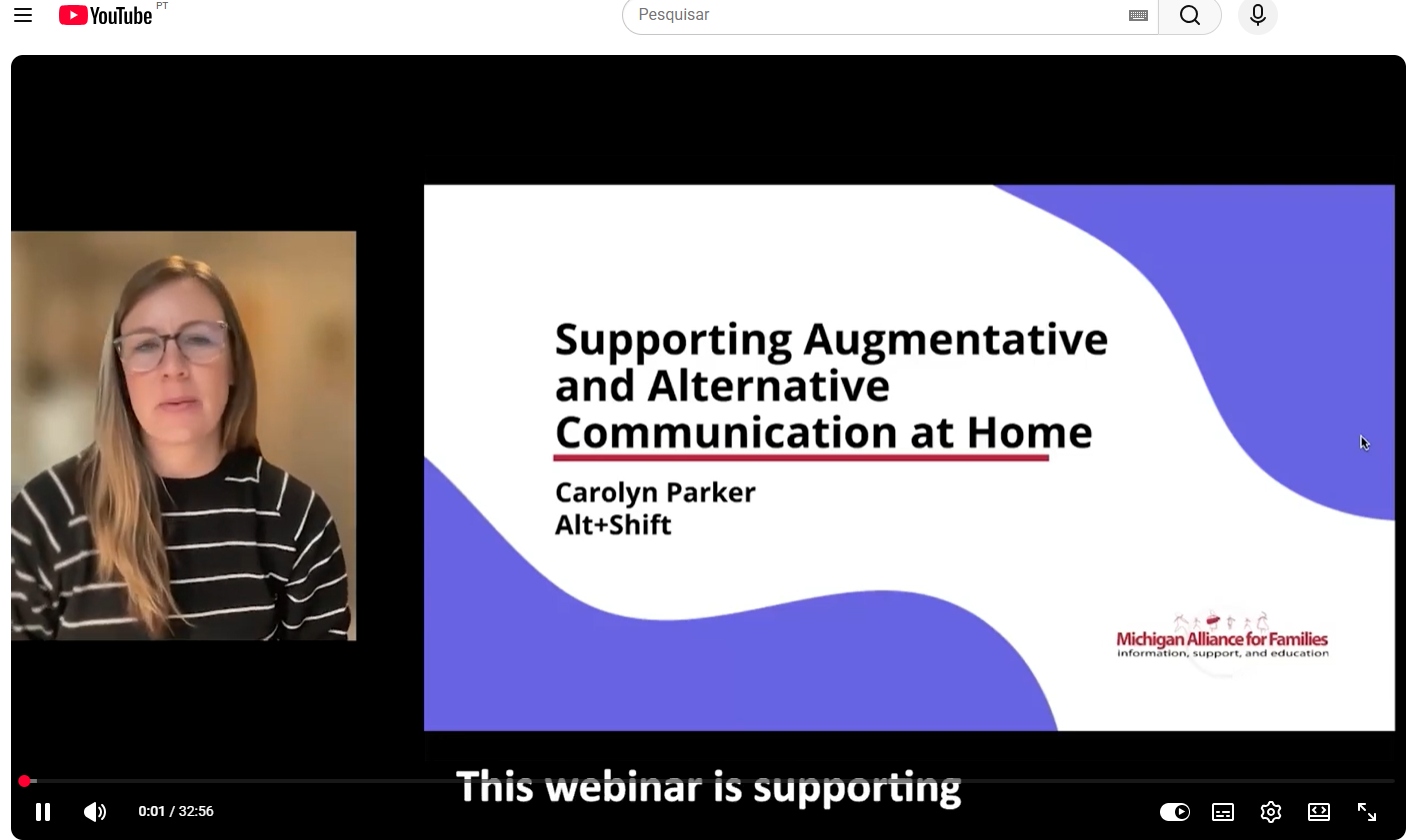
You might find it very helpful to watch this video about Supporting ACC at home. This is the link, in Youtube:

2. AAC IN DOMESTIC ROUTINES
Communication should be integrated into what already happens, and not be an additional task.
- Meals: expressing preferences (more, finished, hot, taste).
- Hygiene: predictability through visual calendars and specific symbols for bathing or brushing teeth.
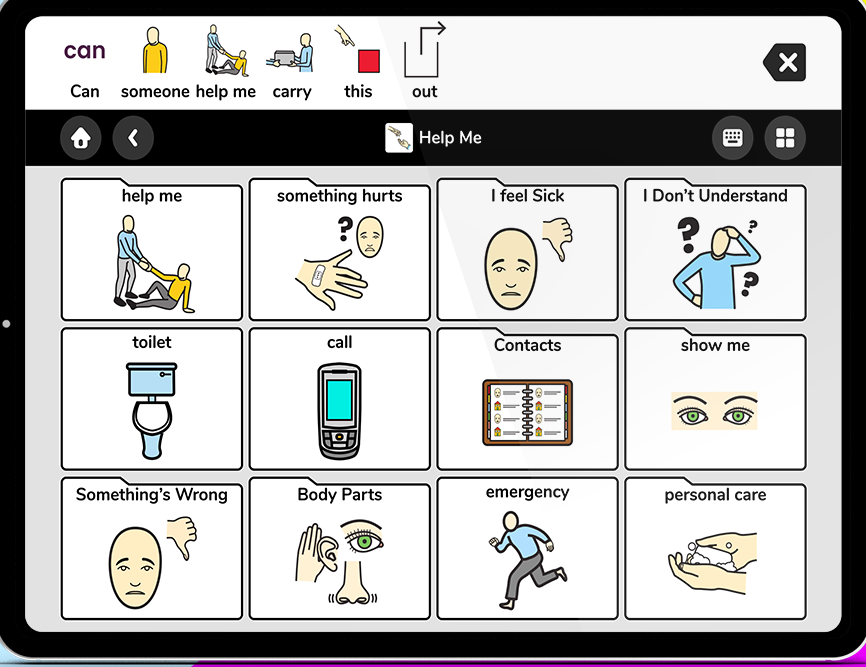
- Daily Needs: giving autonomy to ask for help, express pain or tiredness.
Information:
You might find it very helpful to watch this video about Supporting ACC at home. This is the link, in Youtube:
3. AAC FOR PLAY AND IN THE COMMUNITY
- Playtime: use of core vocabulary such as "go," "stop," "again," "help."
- Transportation and outings: use portable holders (keychains with symbols or laminated boards) for car, bus, or trips to the park.
- Real-life scenarios: prepare social itineraries or specific boards for going shopping or to the doctor.
4. HOME-SCHOOL COORDINATION
- Communication Diary: a two-way system (digital or paper) where relevant events are reported so that both contexts can "talk" about what happened on the other side.
- Independence Strategies: alignment of goals so that the child is no more dependent at home than at school.
- Tutorial Package: quick guide for caregivers (how to charge the device, how to add vocabulary, how to clear the symbols).
5. ACTION PLAN/IMPLEMENTATION
Step
Practical Action
Objective
Expected Result
1. Home Audit
Identify 3 moments of the day (e.g., getting dressed, watching TV, having a snack) where communication is necessary but doesn't yet happen.
Identify opportunities for spontaneous communication.
Priority list for introducing specific symbols.
2. Preparation of Supports
Create and place low-tech versions (plasticized planks) in "wet" or hazardous areas (bathroom, kitchen, outdoors).
To ensure that the user has "voice" in all spaces, without fear of damaging the main device.
Universal access to communication in any room of the house.
3. Modeling Training
Train family members to point to the symbols while speaking, without pressuring the user to respond.
Transforming parents into effective communication role models (Assisted Language Stimulation).
The user begins to see AAC as a natural way to interact.
6. PRATICAL ACTIVITIES
Family involvement is fundamental to the development of a child's communicative and cognitive skills. In this context, the practical activities that will be presented aim to provide simple and effective strategies so that parents can support their children's learning and communication process on a daily basis.
The activities were planned considering everyday situations, in order to integrate the practice of ACC (Comprehensive Learning and Communication) in a natural and consistent way. In addition to promoting language and comprehension development, these strategies encourage the child's active participation, strengthen family bonds, and promote an environment rich in communication opportunities.
Throughout the following activities, parents will have the opportunity to experiment with different techniques, observe the child's responses, and adapt the resources according to individual needs. The goal is to transform learning into a collaborative, enjoyable, and meaningful process for the whole family.
ACTIVITIE 1
Activity: “Communication Diary”
Objective: Encourage the family to monitor and record the user's use of AAC at home.
Detailed Description: Parents should record daily instances where the user utilizes the AAC device or symbol systems. This includes information about words/phrases used, context, emotions, and the user's responses. This activity allows for observing patterns, reinforcing learning, and identifying areas that need additional support.
For exemple:
Date
Situation
Words/Phrases Used
Context
User Emotions
Answers/
Observations
12/02/2026
Music
"Sing", "More"
Room, father and brother
Happy, participative
He indicated when he wanted to repeat the song; animated gestures during the song.
12/02/2026
Snack time
"I want juice," "Thank you"
Kitchen, present father
Satisfied
Indicou a bebida no AAC; agradeceu com sorriso
How to use:
Date: the day the activity took place.
Situation: describe what was happening (e.g., snack time, playing in the backyard).
Words/Phrases Used: record the words or phrases the user communicated with the AAC.
Context: location, people present, or activity (e.g., cooking with mother and brother).
User's Emotions: how they felt (happy, frustrated, excited, etc.).
Responses/Observations: family reactions, successes, difficulties, or lessons learned.
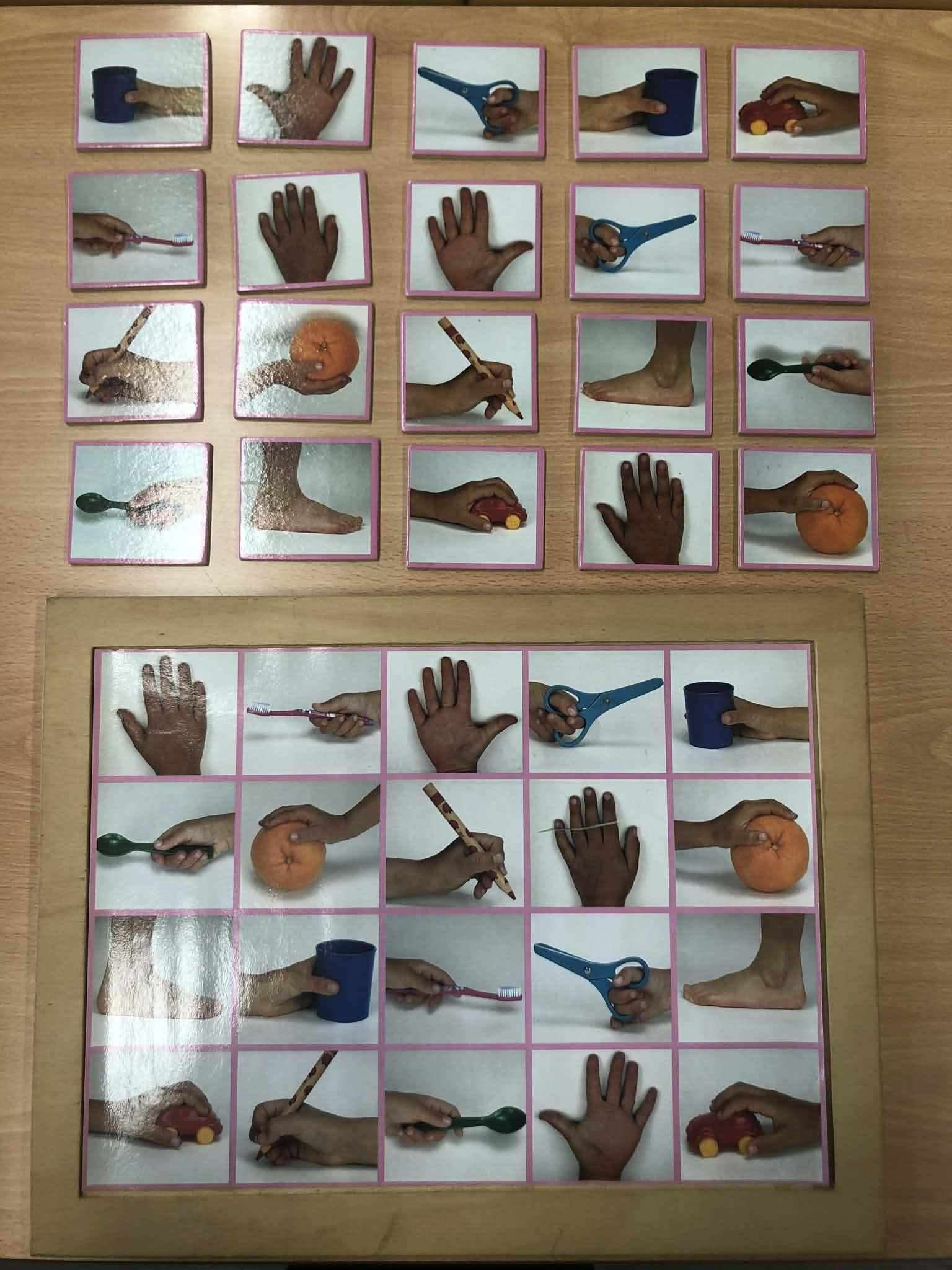
In addition, the next board game was developed to help organize and understand daily routines in a playful, accessible, and interactive way, especially designed for people who use ACC (Augmentative and Alternative Communication). Through images, symbols, and sequential activities, the game stimulates autonomy, communication, and recognition of daily life stages, such as waking up, eating, studying, playing, and resting.
In addition to promoting the learning of routines, the game encourages social participation, decision-making, and the expression of needs and preferences, making the educational process more meaningful and inclusive. Therefore, it presents itself as a pedagogical tool that can be used at home, at school, or in therapeutic settings, contributing to the development of independence and functional communication.
ACTIVITIE 2
Activity: “Interactive Reading Sessions”
Objective: Promote interaction and language comprehension using AAC during reading.
Detailed Description: Choose a short book or story that is a favorite of the user. While you read together, encourage the child/adult to use AAC (Augmented Literacy Act) to answer simple questions, comment on pictures, or predict events in the story. The family should praise attempts and expand the vocabulary presented in AAC.

Next, there are some apps that can be essential:
Talk & Read – simple and direct, it highlights communication during reading.
StoryTalk – combines “story” and “talking,” emphasizing interaction.
ReadTogether – reinforces the collaborative and family aspect of reading.
Chat & Story – suggests conversations that happen alongside the story.
StoryBridge – symbolizes the bridge that ACC creates between the child and understanding the story.
Listen & Speak – focuses on listening comprehension and expression using AAC.
ACTIVITIE 3
Activity: “Daily Choice Routine”
Objective: Develop autonomy and decision-making skills using AAC.
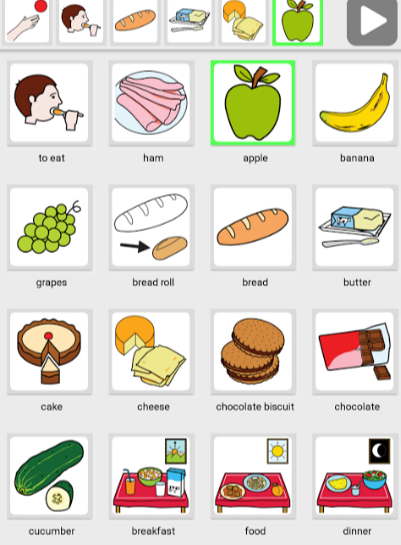
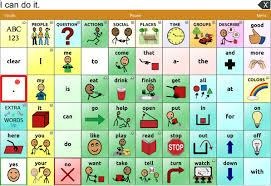
Detailed Description: Throughout the day, the family offers the user choices (e.g., "What snack do you want?" or "What clothes to wear?") and encourages the use of the AAC to communicate the decision. The activity can be adapted to various daily tasks, promoting independence and positive reinforcement.
Or, we can do this Home-School Communication Diary:
Objective: To share news and generate conversations.
• Today at School:
- What I ate: _______
- Who I played with: _______
- My mood: [Happy / Tired / Irritated]
- Something new: _______
• Today at Home:
- Did I sleep well? [Yes / No]
- Special event: _______
- Message for the teacher: _______
Essential Vocabulary for Routines
Hygiene (Bathroom/Shower)
- Actions: Wash, Brush, Clean, Open, Close.
- Objects: Brush, Toothpaste, Towel, Water, Soap, Toilet.
- Concepts: Hot, Cold, Wet, Dirty, Clean.
Meals (Kitchen)
- Core Vocabulary: More, Finished, Want, Like, Dislike.
- Actions: Eat, Drink, Blow, Cut.
- Comments: Good, Bad, Hot, Thirsty, Hungry.
ACTIVITIE 4
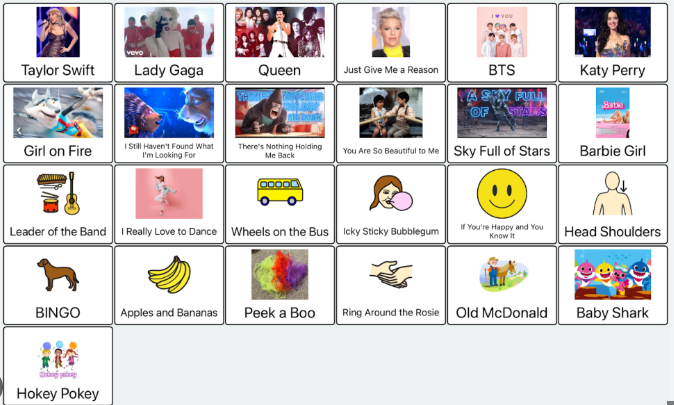
Activity: “Music and Songs with AAC”
Objective: Enhancing expression and comprehension skills through AAC in playful activities.
Detailed Description: Choose simple songs or rhymes and encourage the user to sing or indicate keywords using AAC. The family can point to symbols, reproduce sounds, or encourage rhythmic responses. This stimulates spontaneous communication, memory, and association between words and actions.

ACTIVITIE 5
Activity: “Family Meal Planning”
Objective: To stimulate functional communication and participation in daily tasks using AAC.
Detailed Description: Involve the user in choosing the menu or shopping list, encouraging the use of AAC (Automated Appetite Competence) to express preferences, favorite ingredients, or to refuse foods. The family can support this with images, symbols, or prepared phrases, reinforcing autonomy and social skills.
7. ASSESSMENT
The evaluation focuses not only on user performance, but on the effectiveness of the entire communication ecosystem at home. To measure progress holistically, the use of three complementary tools is proposed, allowing for real-time adjustments to strategies:
a) Monitoring Family Self-Efficacy (Confidence Questionnaire)
Before starting the activities and after completing the module, family members must fill out a confidence questionnaire. This technique allows us to measure the level of comfort and competence perceived by caregivers in handling the AAC system. The focus is on the family's ability to be an active partner, identifying whether technical doubts have been resolved and whether confidence in performing the modeling has increased throughout the process.
b) Analysis of Intentionality and Usage (Frequency Record)
Frequency recording is used to observe the user's evolution from induced to spontaneous communication. Through this data collection technique, the family records the interactions initiated by the user at different times of the day. The goal is to verify if AAC (Augmentative and Alternative Communication) is becoming a tool of choice for autonomously expressing needs, protests, or comments, allowing the identification of which routines require more stimulation.
c) Home Accessibility Audit (Environmental Checklist)
The final component of the assessment consists of a technical verification of the physical spaces of the house. The Environment Checklist serves to validate whether the AAC media (both the main device and the low-tech boards) are strategically positioned and visible in all rooms. This assessment ensures that the user's "voice" is never out of reach, correcting physical barriers that may impede access to communication at critical moments, such as hygiene or mealtimes.
7. 1. Example of a Family Confidence Questionnaire in CAA
Instructions: Please mark with an X the level that best describes how you feel about each statement, on a scale of 1 (Not at all confident) to 5 (Completely confident).
Affirmation
1
2
3
4
5
1. I feel comfortable using the AAC system to talk to my child/relative.
☐
☐
☐
☐
☐
2. I know how to find the most important words (Core Vocabulary) on the device/board.
☐
☐
☐
☐
☐
3. I feel capable of doing modeling (pointing to the symbols) during daily routines.
☐
☐
☐
☐
☐
4. I know how to react when the device malfunctions or runs out of battery.
☐
☐
☐
☐
☐
5. I can identify new communication opportunities at home or on the street.
☐
☐
☐
☐
☐
6. I feel comfortable explaining to other people (extended family, friends) how to communicate with the user.
☐
☐
☐
☐
☐
7. I know how to use the Home-School Diary to share relevant information.
☐
☐
☐
☐
☐
How to analyze the results:
- Low Score (1-2): Indicates an area where parents need practical demonstration (see the technician doing it) or simpler tutorials.
- Medium Score (3): Indicates that parents already possess the theoretical knowledge, but need encouragement to gain fluency.
- High Score (4-5): Indicates autonomy. These parents may even help train other family members.
8. Example of an Environment Checklist (AAC at Home)
This checklist helps ensure the home is "ready to speak".
a) Physical and Visual Accessibility
- Does the AAC device have a fixed and visible place when not in use?
- Are there low-tech supports (plastic boards) in strategic locations (refrigerator, exit door, mirror)?
- Is the device screen positioned at the user's eye level?
- Is the charger accessible and is the device charged daily?
b) Context of Use (Specific Zones)
- Bathroom: Is there a hygiene support board near the sink or bathtub?
- Kitchen/Meals: Is the core vocabulary (want, more, finished) available on the table?
- Play Area: Are the symbols for favorite toys or activities within easy reach?
c) Family Dynamics
- Do all family members know where the communication system is located?
- Is the device volume adjusted so that it can be heard clearly in that room?
- Does the AAC system track the user if they change rooms?
(Tip: If you answered "No" to any point, identify it as a priority for next week.)
8.1. Another example of assessment: Monitoring in a Family Context
This checklist should be completed after the first two weeks of implementing the action plan.
Success Indicator
Yes
In progress
Not yet
Is the AAC system accessible in all rooms of the house?
☐
☐
☐
Do the partners (parents/siblings) model in at least 3 routines?
☐
☐
☐
Does the user use AAC to express a basic need?
☐
☐
☐
Does the user use AAC to protest or to say "no"?
☐
☐
☐
Was the Home-School diary filled out at least 3 times a week?
☐
☐
☐
Does the family feel comfortable editing or adding new words?
☐
☐
☐
9. PARENT TUTORIAL PACK (QUICK GUIDE)
This guide serves as a quick reference sheet to ensure that the AAC technology or system is always operational.
1. Device and Battery Care
• Golden Rule: The device should be charged every night, just like a cell phone.
• Accessories: Check that the protective case is properly fitted. The user's voice needs protection!
• Sound: Ensure the volume is at an audible level for the environment (neither too low to be heard, nor too high to cause discomfort).
Vocabulary Management and Editing
• Add Words: Only add words that are motivating for the child (e.g., the name of a favorite toy or a new snack).
• Personalization: Use real photos of family members or places the child frequents to facilitate recognition.
• Consistency: Before changing a symbol's location, consult the school staff. "Motor memory" is fundamental for fluency.
Backup and Security
• Backup: Perform a backup of the software/configuration once a month (or after major edits).
• Plan B (Low Technology): Always have a printed and laminated version of the main vocabulary. Technology can fail (low battery), but the voice cannot stop.
Quick Troubleshooting
• Screen frozen? (Model-specific forced restart instructions).
• No sound? Check the "mute" button or accessibility settings.
• Where to get help? Contact technical support or your therapist.
10. MONITORING IN A FAMILY CONTEXT
This checklist should be completed after the first two weeks of implementing the action plan.
Success Indicator
Yes
In progress
Yet No
Is the AAC system accessible in all rooms of the house?
☐
☐
☐
Do the partners (parents/siblings) model in at least 3 routines?
☐
☐
☐
Does the user use AAC to express a basic need?
☐
☐
☐
Does the user use AAC to protest or to say "no"?
☐
☐
☐
Was the Home-School diary filled out at least 3 times a week?
☐
☐
☐
Does the family feel comfortable editing or adding new words?
☐
☐
☐
CONCLUSION
So, family involvement in the use of Augmentative and Alternative Communication (AAC) at home is essential for the development of the user's communication, autonomy, and social skills. When family members actively engage—recording interactions, offering choices, supporting reading, encouraging songs, and planning daily activities—they provide an environment rich in opportunities for communication and continuous learning.
Family support strengthens not only the student's linguistic competence but also their confidence, motivation, and independence. Furthermore, it allows the family to observe patterns, identify specific needs, and collaborate consistently with speech-language pathologists or therapists. Family involvement is not only beneficial but fundamental to maximizing the potential of AAC, transforming communication into a meaningful and enjoyable daily experience for the student.
The transition of AAC to the home and community context represents the definitive step towards true user autonomy. As we have seen throughout this module, the success of this implementation does not depend on technological complexity, but on the consistency of routines and the trust of communication partners.
By structuring the home with accessible supports, prioritizing core vocabulary during hygiene and leisure time, and maintaining a fluid communication channel with the school, the family ceases to be merely a spectator and becomes the main facilitator of the user's voice. Through the assessment tools and practical tutorials presented here, we ensure that AAC ceases to be an isolated task and becomes the natural language of the home, allowing communication to happen anywhere, anytime, and with anyone.
Bibliographic References
Andrade, M. J., & Martins, A. C. (2012). Comunicação Aumentativa e Alternativa: Guia de boas práticas. Instituto de Segurança Social.
Beukelman, D. R., & Light, J. C. (2020). Augmentative and Alternative Communication: Supporting Children and Adults with Complex Communication Needs. Paul H. Brookes Publishing.
Light, J., & McNaughton, D. (2014). Communicative Competence for Individuals who require Augmentative and Alternative Communication. Paul H. Brookes Publishing.
Nunes, L. R. d. O. P. (2003). Favorecendo o Desenvolvimento da Comunicação em Crianças e Jovens com Necessidades Educacionais Especiais. Dunya.
Sennott, S. C., Light, J. C., & McNaughton, D. (2016). AAC Modeling with the Family: A Systematic Review. Am J Speech Lang Pathol.
Blogs and Portals
PrAACtical AAC - https://praacticalaac.org/
AssistiveWare (Blog) - https://www.assistiveware.com/blog
-
Teachers evaluation
-
Parents evaluation

Funded by the European Union. Views and opinions expressed are however those of the author(s) only and do not necessarily reflect those of the European Union or the National Agency for Community Programs in the Field of Education and Vocational Training (ANPCDEFP). Neither the European Union nor ANPCDEFP can be held responsible for them.
Copyright @eDash. All Rights Reserved by EnvyTheme