Module VII Designing AAC-Based Lesson Plans
Module VII Designing AAC-Based Lesson Plans
Abschnittsübersicht
-
MODULE 7 Designing AAC- Based Lesson Plans
Designing a lesson based on Augmentative and Alternative Communication requires a shift in perspective that transforms the classroom into a narrative and visual ecosystem where all information is accessible through multiple channels. This process begins with a thorough analysis of the subject matter to extract not only key concepts but also the logical relationships that connect them. In the initial planning phase, the teacher acts as a linguistic facilitator, identifying the core vocabulary required for ongoing interaction and integrating it with subject-specific vocabulary, ensuring that each complex term has a clear, iconic equivalent that does not detract from its scientific or literary value.
The lesson architecture then develops through modeling, in which the teacher becomes the primary user of AAC, pointing to symbols on the IWB or paper charts while explaining. This constant, integrated linguistic input allows the student to perceive the symbolic code not as an isolated prosthesis, but as a living language shared by the entire class. In this context, the learning environment is "engineered" to offer continuous communication opportunities: materials are not simply handed out, but become the object of negotiation, requests, and comments, transforming assignment time into an opportunity for authentic social exchange.
Moving toward the operational phase, teaching focuses on reducing cognitive load through visual aids that guide students in understanding timelines and operational procedures. While in primary school the emphasis is on constructing sentences that describe concrete phenomena, in secondary school the design shifts toward narrative critical thinking, where symbol-based writing software allows for the manipulation of abstract concepts such as historical causality or the psychological analysis of characters. Students are no longer passive recipients of simplified information, but active participants who can challenge, approve, or expand on an idea using their own personalized set of symbols.
Finally, the assessment and synthesis phase must reflect this methodological coherence, avoiding the pitfall of purely rote assessment. Assessment in an AAC-based lesson plan focuses on effective communication and the ability to refine and refine. It monitors how students use symbols to construct new knowledge or interact with peers during group work. The success of the teaching intervention is evident when students stop answering closed questions and begin posing original questions, using tools designed not only to meet academic requirements but also to express their identity within the learning community.
- The ethical and theoretical foundation of Augmentative and Alternative Communication
Designing an intervention based on Augmentative and Alternative Communication (AAC) cannot ignore a solid epistemological foundation that views communication as an inalienable human right, also enshrined in Article 9 of the UN Convention on the Rights of the Child.
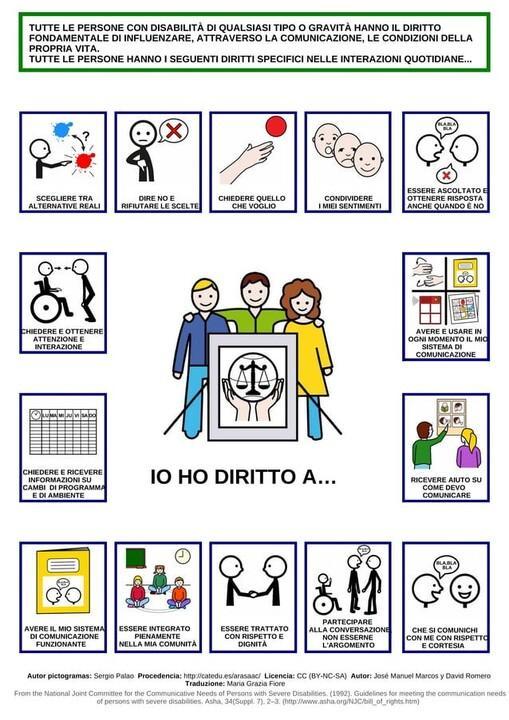
It is also necessary to cite the Charter of Communication Rights:
Every person, regardless of their degree of disability, has the fundamental right to influence their life conditions through communication. In addition to this basic right, a series of specific rights must be guaranteed in everyday interactions and interventions involving people with severe disabilities.
- The right to have social interactions, maintain social closeness and build relationships
- The right to ask for desired objects, actions, events and people
- The right to reject unwanted objects, actions, situations, and choices
- The right to express personal preferences and feelings
- The right to choose between meaningful alternatives
- The right to comment and exchange opinions
- The right to ask for and give information, including information regarding changes in routine and environment
- The right to be informed about people and events relating to one's life
- The right to have access to any intervention and support that can improve communication
- The right to have every communicative act recognized and to obtain a response even if it is not possible to satisfy the request
- The right to have access at any time to any necessary augmentative and alternative communication aid and the right to have it always updated and in good working order
- The right to access contexts, interactions and opportunities that promote and encourage participation as a communicative partner in relational exchanges with other people, including one's peers
- The right to be treated with dignity and to be addressed with respect and courtesy
- The right to be addressed directly without the disabled person being addressed in the third person when he or she is present
- The right to receive clear, meaningful, and linguistically and culturally appropriate communications
The ethical foundation of AAC lies in the recognition of communication as a primary human need, essential to the very definition of identity. Without the ability to communicate, individuals experience a form of social invisibility that obliterates their subjectivity. Theoretically, this approach shifts from the medical model of disability, which views communication deficits as pathologies to be "cured" or normalized, to the social model. From this perspective, disability does not reside within the individual, but in the interaction between them and an environment unprepared to accommodate their expressive modalities. The ethics of AAC therefore impose a reversal of responsibility: it is not the student who must demonstrate the " prerequisites " to communicate, but the environment (school, family, society) that must take responsibility for breaking down communication barriers.
The concept of "presumption of competence" represents the central ethical pillar of this vision. It is the moral obligation to act on the assumption that every individual has something to communicate and the intrinsic capacity to learn, regardless of the severity of cognitive or motor challenges. Designing for AAC means honoring this presumption, providing complex tools that allow not only the expression of basic needs, but also the expression of humor, doubt, dissent, and affection. Denying access to robust communication systems for fear that the student is "not ready" constitutes an ethical violation that limits the individual's intellectual development and self-esteem.
Another fundamental theoretical axis is that of self-determination. AAC is not just an educational tool, but a tool for political emancipation. Being able to choose, refuse, or express a divergent opinion allows students to move from a passive spectator of their own lives to a protagonist. This is directly linked to the concept of "social participation" defined by the ICF (International Classification of Functioning, Disability, and Health). Participation is not simply physical presence in a place, but effective involvement in activities and decisions that affect the community. In the school setting, this translates into the right to participate in class discussions, collaborate with classmates, and influence the group's relational climate.
The ethics of AAC also extends to the concept of "linguistic democracy." In an inclusive society, no communication code should be considered superior to another. The use of symbols, gestures, or eye-pointers has the same dignity as the spoken word. This implies that teachers and classmates must become competent "communication partners," learning to use and respect the student's code. AAC- based design thus becomes an act of social justice that guarantees every student, regardless of their verbal abilities, the opportunity to leave their mark on the world and build meaningful connections with others.
From a theoretical perspective, AAC is also based on an ecological view of development. Communication does not occur in a vacuum, but within a network of relationships and contexts. This means that intervention cannot be limited to support hours or therapeutic settings, but must permeate every moment of the school day. The multimodal approach recognizes that every human being uses a variety of channels to express themselves—facial expressions, vocalizations, body language—and that AAC intervenes to enhance and complement these channels, never to forcibly replace them.
Finally, the impact of AAC on the construction of the self is profound. The ability to narrate one's experience is what allows us to make sense of the past and plan for the future. Without an effective communication system, memory and imagination remain prisoners of silence. Providing symbols for emotions, memories, and dreams means giving students the tools to construct their own autobiography. In conclusion, AAC is not a technique to "make the silent speak," but an ethical commitment aimed at ensuring that the dignity of the individual is preserved through the constant exercise of their expressive power.
The introduction of multimodal communication systems into the school environment addresses every individual's primary psychological need to understand and interact with the world around them. As suggested by Savater's references, human beings are defined by their praxis, or action guided by conscious choice. In this context, AAC acts as a catalyst for self-determination, transforming students from passive recipients of care to active participants in their own learning journey. The goal is not simply to replace absent or deficient verbal language, but to enhance all expressive modalities that allow individuals to exercise control over their environment and their lives, reducing the cognitive barriers that often generate isolation and emotional frustration.
This praxis that Savater discusses is not merely a mechanical act, but the expression of an intentionality that seeks recognition in the other. When an individual is deprived of speech, the risk is not only a lack of communication, but also the progressive erosion of a sense of personal efficacy; the inability to influence reality through choice can lead to a state of "learned helplessness," where giving up becomes the only possible response to an indecipherable environment. AAC, following this path, restores to the student the ability to "say no," to disagree, and to negotiate their own presence, transforming the act of communication into a gesture of fundamental freedom. From this perspective, multimodal communication becomes the language of possibility: it does not simply describe the world, but allows the individual to inhabit it as a social actor with their own distinctive voice, even if expressed through alternative channels.
Furthermore, the shift from passivity to active participation has profound implications for identity formation and emotional balance. Interaction mediated by symbolic supports regulates internal processes, offering tangible form to thoughts and desires that would otherwise remain confined to a pre-symbolic and chaotic dimension. This process of expression is essential to reducing the sense of estrangement from the school environment that often afflicts those with a communication disability. Through AAC, students discover that their thoughts have weight, that their willpower can generate change, and that their mind is accessible to others. This establishes a relational ecology in which the cognitive barrier is no longer an insurmountable limit, but a threshold that can be crossed through a collective commitment to translation and mutual listening. Student well-being, therefore, derives not only from academic success, but from the awareness of being a "person who communicates," embedded in a fabric of shared meanings that validate their existence and their human value.
- Definition of Integrated Teaching and Communication Objectives
Within an inclusive teaching module, goal setting must proceed along parallel and constantly intertwined tracks: on the one hand, the acquisition of curricular skills and on the other, the development of strategic communication skills. Designing for AAC means setting goals that aim to improve executive functions, facilitating logical reasoning processes and adapting to contextual changes. An effective module aims to provide students with the tools to manage the unexpected and interact effectively with peers, fostering a classroom climate where diverse communication codes become a resource for everyone. Goals must therefore reflect a holistic view of the student, where mastery of pictographic symbols, such as those of the ARASAAC system, is not an end in itself but is aimed at social participation and the construction of shared meanings within the class.
Strategic Implementation and Engineering of the Learning Environment
The AAC implementation action plan requires meticulous environmental engineering to transform the physical space into a speaking and accessible environment. This process begins with structuring time and space through visual aids that allow each student to orient themselves independently. The technique of modeling, or Aided Language Stimulation, represents the cornerstone of this phase: the teacher and classmates become communication partners who consistently use the student's symbolic code while speaking, providing continuous and situated linguistic input. This approach is not limited to support hours but permeates the entire school day, from routine activities to the explanation of complex concepts. A significant example of this implementation can be found in the creation of transversal learning units where symbol decoding and sentence construction become an integral part of the playful and educational activity, allowing equal engagement between the student with complex communication needs and the rest of the class.
The effectiveness of this environmental engineering lies in the transition from an intervention focused exclusively on the deficit to a systemic-relational model. As highlighted by the fundamental contributions of Beukelman and Mirenda (2014), communication is not an isolated ability, but the result of a dynamic interaction between the individual and their communication partners. From this perspective, the modeling technique is not a simple teaching aid, but a true linguistic immersion that mirrors the processes of natural language acquisition. The teacher, acting as a model, demonstrates that the symbolic code has the same dignity and functionality as the spoken word, breaking down the relational asymmetry that often places students with complex communication needs in a position of perpetual subordination.
Scientific literature, particularly the studies of Goossens, Crain, and Elder (1992), emphasizes how constant exposure to increased linguistic input is the essential prerequisite for the student to be able, in turn, to begin producing messages spontaneously. Without an environment that "speaks" the same code as the student, the communication device risks remaining a foreign object. The engineering of the learning environment must therefore include a widespread distribution of themed tables and visual indicators that Cafiero (2005) defines as "bridges of meaning," tools capable of making the environment predictable and, consequently, emotionally safe.
This transversal approach finds its maximum expression in peer participation. When classmates are trained as competent communication partners, what Costantino (2011) defines as an "inclusive community of practice" is activated. In this context, AAC ceases to be a special practice and becomes a common good: classmates not only learn to respect each other's waiting times, but also discover new strategies for cooperation, transforming communicative diversity into a resource for developing the social skills of the entire group. The integration of symbols into play activities and daily routines ensures that students never have to choose between learning content and the need to belong, as both are conveyed by the same shared sign system.
Curricular Adaptations and Multidimensional Evaluation Processes
Adapting lessons for different grade levels requires methodological flexibility that can translate academic content into accessible formats without sacrificing its intellectual dignity. In secondary schools, for example, the use of technological tools and specific software allows students to address complex topics by breaking down concepts into informational units supported by symbols. Assessment, in this context, moves away from standardized parameters to embrace a multidimensional perspective that takes into account communication effectiveness, social participation, and emotional well-being.
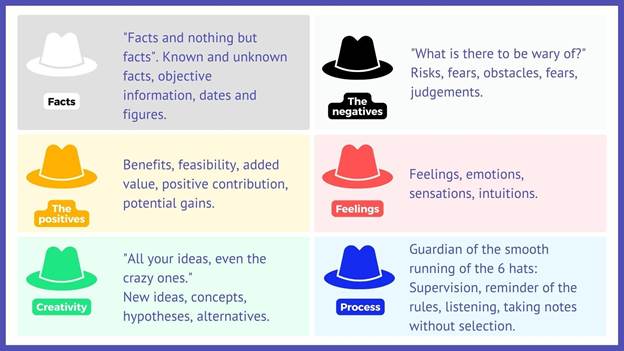
Using reflective tools such as De Bono's six-hats technique allows for the learning experience to be analyzed from multiple perspectives, evaluating not only objective results and acquired knowledge, but also emotional reactions, identified critical issues, and the creative potential of the learning process undertaken. Student self-assessment ultimately becomes a crucial moment for monitoring their sense of efficacy and group belonging, completing the cycle of a truly inclusive educational process.
Section
Description
Educational Objective
What they need to learn (e.g. the water cycle).
Communication Objective
What symbols/functions will they use (e.g. asking “why”, describing “cold”).
Input ( Modeling )
What medium will the teacher use to explain? (e.g., a themed table).
Practical Activity
Manipulative or digital task that requires choice and interaction.
Verify
How the student demonstrates understanding through AAC.
- Kindergarten: Beyond Narration
The goal here is social participation and building decision-making autonomy.
In preschool, moving beyond passive narrative paves the way for a true pedagogy of inclusion, where the central objective is social participation and the achievement of independent decision-making based on the child's desires. This process is concretely achieved through the creation of a Modified Book, a tactile-visual medium that transforms reading into a multisensory experience, making content accessible and manipulable.
In this context, technical adaptation is not simply an external support, but the engine that allows students to influence the environment. The use of the E-tran, a transparent panel designed for eye-tracking, becomes crucial when severe motor disabilities are present: through eye contact mediated by the panel, children can indicate choices, characters, or emotions, transforming their gaze into a powerful and intentional voice that makes them the protagonists of the educational dialogue.
Complementing this, the inclusion of a Big Mack—a single, easily activated button—introduces the dimension of audible communication and turn-taking. This tool not only plays a pre -recorded message, but also allows children to enter the class's narrative rhythm with precision and intentionality. For example, as the story reaches its climax, children can activate the "chorus" or a key phrase (such as the famous "But he was still hungry!" ), directly experiencing the effect of their actions on the group. This audible interaction strengthens self-esteem and the perception of efficacy, as children see their classmates' enthusiastic reaction to their intervention, breaking down the wall of silence and actively participating in the construction of collective meaning.
The entire process is finally framed by the Modeling technique. Here, the teacher doesn't just read, but accompanies the narrative by pointing out symbols for the entire class, standardizing the iconic code as a common language. In this way, Augmentative and Alternative Communication is no longer a "prosthesis" for the individual, but becomes a relational bridge that enriches each child's communicative experience, transforming the classroom into a citizenship laboratory where everyone has the means to express themselves and make decisions.
2. Primary School: Science and Abstraction
At this stage we move from "naming" to "relating" concepts.
In elementary school, science teaching marks a fundamental developmental transition: children no longer simply "name" objects, but begin to "connect" concepts, developing the first forms of abstract thought. At this stage, teaching activities expand and become structured through the documentation of the experiment using a logbook written using Augmentative and Alternative Communication (AAC). This tool is not simply a chronicle, but becomes the place where scientific thinking takes visible form, allowing each student to elaborate on their experience and establish causal connections between observed phenomena.
Technical adaptation evolves in step with the complexity of thought. We are no longer satisfied with simple choice tables, but instead use an advanced communication matrix that includes fundamental logical connectors, such as "WHY," "THEREFORE," and "AFTER." This syntactic structure is essential, for example, in the water cycle experiment: the student is not limited to listing the states of matter, but is encouraged to make predictions and formulate scientific hypotheses. Thanks to the support of symbols that convey conditional structures, the child can express complex thoughts such as: "IF I apply heat -> THEN the ice melts." This exercise transforms communication from the labeling of objects to the expression of logical mental processes, laying the foundation for the experimental method.
Interaction and the collective dimension of learning find their synthesis in the creation of a dynamic classroom poster. In this space, the symbolic labels are not isolated, but are strategically placed alongside actual photographs of the experiment steps, taken by the students themselves during the laboratory activity. This visual juxtaposition is a powerful cognitive facilitator: the photograph documents the concrete and tangible event, while the underlying symbol extracts its universal meaning. This constant cross-reference between the real image and the iconic code gently guides the student through the delicate transition from the concrete object to the abstract concept, making the language of science an accessible, shared, and profoundly inclusive territory.
3. Secondary School: History and Critical Thinking
The challenge here is the complexity of disciplinary language (the specific lexicon) and the expression of the self.
In secondary school, the educational challenge shifts toward mastering disciplinary language and developing critical thinking skills. At this stage, the goal is no longer simply understanding facts, but the ability to analyze historical complexity and express one's identity through value judgments. Teaching thus expands through source analysis and debate, transforming the study of history into an exercise in active citizenship where students learn to interrogate the past to interpret the present.
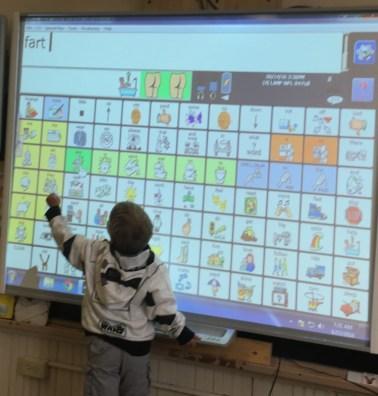
The technical adaptation reflects this cognitive growth through the use of digital Content Notebooks, flexible tools that allow for the management of specific and abstract vocabulary. For example, when studying Ancient Rome, the work doesn't stop at mnemonic descriptions, but evolves into critical comparison tables between the ancient and modern worlds. In these concept maps, the use of AAC becomes sophisticated: symbols are introduced for abstract and complex concepts such as "Privacy," "Social Hierarchy," or "Architecture," allowing students to categorize the differences between a Domus and a contemporary apartment. This process of abstraction is essential for developing a comprehensive vision that transcends single chronological data.
The pinnacle of social and disciplinary interaction is reached through participation in the Debate. Here, the student with Special Educational Needs ceases to be a passive recipient of knowledge and becomes an active participant. Through pre -recorded messages on their communicator or text-to-speech software, students can prepare targeted interventions expressing their perspective on profound ethical issues, such as social justice or the human condition in different eras (for example, "The life of slaves was unjust because it denied freedom" ).
This exercise of self-expression within a class debate not only validates acquired historical skills, but also restores the student's power of speech and judgment. Participating in a debate means being part of a peer group on an intellectual level, where technology serves as a bridge for expressing independent and original critical thinking.
Before proceeding, it is appropriate to make a specification that may be useful.
In Italy, the main reference for the creation of Digital Content Notebooks in AAC is represented by the work of Isaac Italy (International Society for Augmentative and Alternative Communication ) and, in particular, by authors and researchers linked to the Benedetta D'Intino Center in Milan.
A prominent figure in this field is Antonella Costantino, who, along with her team, has theorized and promoted the use of AAC not only for primary communication needs, but as a true tool for accessing scholastic knowledge. These authors have worked to transform ministerial texts into "translated" versions that are not simple summaries, but actual architectures of digital thought.
The Digital Notebooks approach
These tools, often built on software like SymWriter or Clicker , are based on some fundamental pillars defined by industry experts:
● Mediated abstraction: Authors such as Maria Grazia Fiore (an expert in inclusive teaching and AAC) have shown how digital notebooks can utilize "sector glossaries." For example, for history or geography, the notebook contains not only the object icon (e.g., the pyramid), but also the concept symbol (e.g., "civilization," "trade," "development").
● The hypertext structure: Unlike paper notebooks, the digital models proposed by these experts allow students to click on a complex concept to open a "sub- table" that explains its meaning, facilitating the expansion of specific vocabulary without overloading the student's working memory.
● Layout customization: The authors emphasize that the digital notebook must be dynamic. On platforms like Mind Express on The Grid , content is organized into grids where students can "assemble" historical or scientific sentences, moving from comprehension to the production of complex texts.
Strategy
Description
Modeling (Language Input)
The teacher speaks while pointing to the symbols. It's essential that the student sees AAC being used naturally by others.
Going Digital
Using apps like LetMeTalk or software like Boardmaker allows you to update your vocabulary in real time, inserting lesson-specific terms (e.g., "Senate," "Evaporation").
4. Strategic Evolution of AAC in the School Curriculum
The evolution of AAC isn't limited to the accumulation of symbols, but manifests itself in a qualitative metamorphosis that guides students toward abstraction and full social inclusion. While in the early years of life, visual support is anchored in the concreteness of the "here and now," with the transition to primary and secondary school, the focus shifts radically toward self-narration. This means transforming communication from a series of functional requests to a complex narrative of identity: where previously students chose between two physical objects, they now learn to narrate their experiences through diaries that connect school and home. It is in this space that critical thinking arises, where the symbol no longer simply indicates a color or an object, but becomes a vehicle for exploring the profound reasons behind emotions and the complex causal connections behind one's own and others' feelings.
At the same time, AAC is becoming an essential tool for study and educational accessibility, becoming the cornerstone for overcoming exclusion from more complex curricular content. In secondary schools, knowledge is democratized through the use of in-books and textbooks entirely translated into iconic code, which guarantee students the right to independently approach subjects such as history or science. Visual concept maps play a crucial role here, allowing students to dismantle and reconstruct abstract concepts in organized graphic structures that facilitate both memorization and oral presentation. Thanks to integration with voice-activated communicators, students are no longer passive recipients of information, but active participants capable of sharing their knowledge with classmates and teachers.
This process ultimately culminates in the development of active and informed citizenship, where autonomy is realized through the ability to inhabit public space. The school environment ceases to be a silent place and transforms into a speaking territory thanks to the systematic labeling of laboratories, gyms, and offices, allowing students to orient themselves without constant mediation. At this stage, the transition from paper charts to digital assistive technologies marks a decisive turning point: the use of tablets and specific software not only speeds up communication, but also makes interaction between peers socially fluid and acceptable. Technology reduces stigma and transforms AAC into a modern and dynamic language, capable of providing young adults with the tools they need to navigate the world, make independent choices, and claim their place in society with a voice that is truly their own.
Secondary School: Academic Communication and Identity
With the entry into secondary school, AAC undergoes a true Copernican revolution, shifting its focus from pragmatic demands to abstract thought and the definition of identity. In this delicate evolutionary transition, the communication tool must move beyond being a simple mediator of primary needs to become a sophisticated cognitive apparatus that allows students not only to interact with the world, but also to discuss, analyze, and, if necessary, challenge it. Limiting vocabulary to concrete terms like "hunger" or "bathroom" would deprive adolescents of their right to intellectual participation; instead, it is essential to introduce an "academic" vocabulary rich in opinion verbs, logical connectives, and qualifying adjectives. Only in this way can students engage with history, science, or literature, arriving at complex judgments on the relevance of a historical event, the outcome of a scientific experiment, or disagreement with an idea expressed in class.
Educational accessibility evolves in tandem, transforming content consumption into active and informed production. Adapting textbooks through specialized software is no longer a final goal, but rather the starting point for students to generate their own work. Creating symbolized concept maps and digital presentations becomes a bridge to fair assessment: thanks to the vocal output of communicators, questioning ceases to be an insurmountable barrier and becomes an opportunity for peer interaction with teachers and classmates. In this context, AAC not only supports learning, but also fosters self-efficacy, allowing students to perceive their contribution as significant and visible within the school community.
Finally, communication is inextricably linked to the construction of identity and the complex network of social relationships typical of adolescence. AAC must foster a profound emotional vocabulary, capable of expressing the nuances of emotional bonds, musical preferences, or comments on everyday life shared with peers. Providing the tools to express complex emotional states prevents relational isolation and ensures that communication impairment does not turn into an emotional prison. Ultimately, the strategic evolution of AAC in secondary schools aims to provide students not only with a method for studying, but with an authentic and multifaceted voice with which to define who they are and who they want to become in the world.
Operational Summary for Teachers
The ultimate goal is to move from a "dependent" communication system (where the adult proposes and the student chooses) to a "generative" system (where the student combines symbols to create original messages).
Objective
Key Strategy
Expected Result
Autonomy
Using VTC and Activity Strips
Reduce anxiety and improve time management
Inclusion
Modeling spread throughout the class
Normalization of the communication code
Learning
Subject-specific glossaries in AAC
Active participation in curricular lessons
Summary and prospects for inclusive development
In conclusion, designing AAC-based lessons is not simply a technical requirement, but represents a profound pedagogical challenge that requires a seamless blend of specialized expertise, empathy, and a systemic vision of inclusion. By building communication bridges and systematically breaking down cognitive barriers, schools move beyond being a place for the mere transmission of knowledge to become laboratories for active citizenship. In this space, every voice, regardless of the channel or medium through which it is expressed, is heard, given dignity, and recognized. The success of an AAC-based intervention, in fact, cannot be measured solely by the number of symbols memorized, but is reflected in the quality of the human relationships established and the ability of the entire school environment to welcome and value the complex variety of human communication.
Continuing resolutely in this direction means investing in a future where accessibility is no longer considered an exception or a concession, but the essential foundation of educational practice. This commitment ensures that every individual has the opportunity to emerge from silence, tell their own story, and contribute their critical thinking to the life of the community. To put this vision into practice, it is necessary to structure a rigorous methodological framework that guides teachers in their daily teaching, following a model that integrates theory and practice through informed planning.
The core of this evolution lies in the structure of the AAC-based Lesson Plan, which must be flexible yet rigorous. Planning begins with the definition of modular objectives that take into account both the subject matter and the student's specific communication skills. The teaching process then develops through an implementation plan that includes adapting the materials: it's not just about translating texts into symbols, but about creating "speaking" learning environments .
An effective lesson template must include three key moments: activation, where the symbols needed for the topic are introduced; development, where students use thematic tables or communicators to interact with the content; and assessment, structured with visual aids that demonstrate understanding beyond verbal production. For example, a science lesson on photosynthesis is mediated through symbolized maps where students can "construct" the biochemical process by manipulating icons of light, water, and oxygen.
The process concludes with an assessment phase that is not punitive, but orienting. Assessing AAC means monitoring how the use of support is effectively reducing the gap between cognitive potential and communicative performance. Future prospects for inclusion envision AAC moving beyond the individual student's classroom to become a universal practice (Universal Design for Learning), where symbol books and visual planners are made available to the entire class, benefiting not only students with complex communication needs, but also international students or those with learning disabilities. From this perspective, school truly becomes the place where everyone, without distinction, is guaranteed the opportunity to actively contribute to the fabric of society.
APPENDIX
Funded by the European Union. Views and opinions expressed are however those of the author(s) only and do not necessarily reflect those of the European Union or the National Agency for Community Programs in the Field of Education and Vocational Training (ANPCDEFP). Neither the European Union nor ANPCDEFP can be held responsible for them.
Copyright @eDash. All Rights Reserved by EnvyTheme